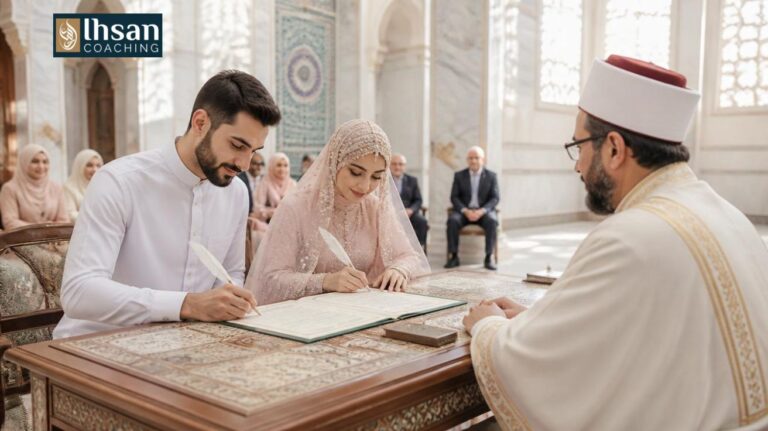


Marriage in Islam is beautifully described by Allah as a source of tranquility, love, and mercy, but when a mother-in-law makes your marriage hard, that peace can quickly vanish. Countless Muslim couples find themselves caught in a painful, emotionally exhausting tug-of-war between honoring a mother and protecting a spouse. If you are struggling with a difficult or intrusive mother-in-law, please know that you are not alone and your feelings of overwhelm are completely valid. Islam offers a balanced, deeply profound framework for navigating these turbulent waters without compromising your faith or your mental well-being. By understanding healthy Islamic boundaries, the true meaning of beautiful patience, and when to seek professional marital coaching, you can navigate this hardship and begin the journey toward healing.
Why Does Mother-in-Law Conflict in Islam Happen So Often?
To solve any conflict, we must first understand its roots. In many Muslim households, the tension between a mother-in-law and a daughter-in-law stems from a mix of cultural misunderstandings, unspoken expectations, and a misapplication of Islamic jurisprudence (Fiqh).
The Misunderstanding of the “Tiered Hierarchy”
A common cultural narrative dictates that a husband’s absolute duty is to his mother, while the wife’s absolute obedience is to her husband. This often creates an unhealthy “tiered hierarchy” where a controlling mother-in-law feels entitled to bend her son to her will, and by extension, control her daughter-in-law. While Islam undeniably elevates the status of mothers placing Paradise at their feet this high status does not grant a mother the right to oppress her daughter-in-law or sabotage her son’s marriage. Oppression (Dhulm) is strictly forbidden in Islam, regardless of who commits it.
Unspoken Expectations and the Burden of Mind-Reading
Many mothers-in-law hold impossibly high, often uncommunicated expectations for their daughters-in-law. There is a frequent expectation that the daughter-in-law should seamlessly integrate into the family, instantly know how the household runs, and act as a mind-reader. When these unrealistic expectations are inevitably unmet, resentment builds. The daughter-in-law feels she can never do enough, leading to emotional burnout and a breakdown in communication.
The Underlying Fear of Loss
Psychologically, much of this conflict is driven by fear. For the mother, there is an intense fear of losing her beloved son to another woman, or losing her position of authority within the family. For the wife, the fear is losing her husband’s loyalty and love to a woman who seems intent on making her life miserable. When both women operate from a place of fear, defensive and toxic behaviors naturally follow.

When Does a Husband’s Duty to His Mother Cross the Line?
One of the most complex aspects of mother-in-law conflict in Islam is the husband’s position in the middle. Husbands are often paralyzed by the fear of displeasing Allah by upsetting their mothers.
Clarifying Islamic Duties
It is an undisputed Islamic obligation for a man to be dutiful, respectful, and kind to his parents (Birr al-Walidayn). However, this duty does not supersede his obligation to treat his wife with justice, kindness, and honor. Allah commands men in the Quran: “Live with them in kindness” (Quran 4:19).
Honoring one’s mother does not mean enabling toxic behavior or allowing one’s wife to be emotionally abused. True Islamic duty requires a man to uphold justice, even if it means gently standing up to his own parents when they are in the wrong.
The Dangers of Always “Taking Sides”
When a husband consistently takes his mother’s side regardless of the facts he destroys the foundation of trust in his marriage. A husband must practice Adl (justice). Justice means evaluating situations objectively, rather than blindly siding with family. A husband can respectfully disagree with his mother and establish boundaries without raising his voice or breaking ties of kinship. Failing to protect a wife from unjust harm is a failure of his Islamic duty as her protector (Qawwam).
How to Set Healthy Boundaries With Your In-Laws in Islam
There is a pervasive myth in some Muslim cultures that having “boundaries” is a Western concept that contradicts Islamic family values. This is entirely false. Establishing healthy boundaries is deeply rooted in the Sunnah; it is how we protect our relationships from breeding resentment and sin.
Defining Islamic Boundaries
Boundaries are not walls built out of anger; they are clear, respectful guidelines about what behavior is acceptable and what is not. A boundary might be setting specific times for visits, kindly declining unsolicited parenting advice, or requesting that marital disagreements remain private between the husband and wife.
Protecting Your Family from Harmful Interactions
If interactions with a mother-in-law consistently result in emotional distress, verbal abuse, or manipulation, the couple must take steps to protect their family. This does not mean severing family ties (Silat al-Rahim), which is a major sin. Rather, it means modifying how and when interactions happen. You can maintain ties through brief, structured, and respectful visits, or by checking in via phone calls, while simultaneously limiting the exposure to toxic behavior.
The Islamic Right to Separate Living Arrangements
It is important to note that from an Islamic legal perspective, a wife has the right to her own separate accommodation where she feels safe, secure, and has privacy. If living with in-laws is causing significant harm or leading to continuous conflict, moving to a separate residence is not only permissible but highly recommended to save the marriage.
How Should a Daughter-in-Law Respond to Toxic Behavior?
When you are on the receiving end of unfair treatment, it is easy to let resentment turn into hatred. But how does a Muslim woman navigate this without compromising her own soul?
The Difference Between Enduring Abuse and Sabr (Patience)
Patience (Sabr) in Islam is often misunderstood as silently enduring abuse or oppression. True Sabr is maintaining your faith, emotional stability, and good character while actively working to improve the situation. You can be patient while still holding firm boundaries. You can practice excellence in character (Ihsan) by refusing to stoop to petty arguments, while also calmly walking away from a disrespectful conversation.
Processing Resentment and Finding Peace
It is human to feel deeply hurt. If you find yourself thinking, “I hate my mother-in-law,” acknowledge that feeling, but do not let it consume your heart. Bring your pain to Allah in your prayers (Dua). Ask Allah to soften her heart and to grant you peace. Focus your energy on things you can control: your own reactions, your relationship with Allah, and your connection with your husband.
Actionable Steps for the Daughter-in-Law
- Communicate Clearly: Use “I” statements to express how you feel to your husband, without attacking his mother’s character.
- Do Not Retaliate: If provoked, respond with dignity or remain silent. Do not give anyone ammunition to use against you.
- Let Your Husband Lead: It is primarily the husband’s responsibility to manage his family of origin. Empower him to step up and have the difficult conversations with his mother.
When Should You Seek Mediation and Wise Advice?
Sometimes, despite your best efforts, the situation remains toxic and the marriage begins to fracture. Islam proactively addresses this.
The Role of Arbitration
When a marriage is on the brink due to external pressures, the Quran provides a clear solution: “And if you fear dissension between the two, send an arbitrator from his people and an arbitrator from her people. If they both desire reconciliation, Allah will cause it between them.” (Quran 4:35). Seeking wise, objective mediators who fear Allah can help de-escalate tension and bring perspective to both families.
Seeking Professional Coaching
If family mediation is not possible, or if family members are too biased to help, it is vital to seek professional support. At Ihsan Coaching, our experts are trained to help Muslims navigate complex family dynamics through the lens of faith and modern psychology. Whether you need individual coaching to heal from emotional burnout, or comprehensive couple’s therapy, seeking help is a sign of strength, not weakness. You can book an appointment today to start your journey toward a healthier, more peaceful family dynamic.
Frequently Asked Questions
How do I respectfully disagree with my mother-in-law in Islam?
Respect in Islam is conveyed through tone and choice of words. You can firmly disagree by saying, “I appreciate your advice, but my husband and I have decided to do it this way,” while maintaining a calm, soft voice and avoiding argumentative behavior.
Why does my husband always take his mother’s side?
Often, husbands are acting out of a deep-seated fear of being labeled a “disobedient son” or earning their mother’s wrath. It usually requires gentle education and sometimes professional counseling for him to realize that standing up for his wife is actually an act of justice, not disobedience.
When is it permissible to limit contact with a difficult mother-in-law?
While you cannot cut ties completely (severing Silat al-Rahim), you are permitted to limit contact to protect yourself from clear emotional or psychological harm. This could mean shorter visits, having your husband handle the majority of the communication, or meeting in neutral, public spaces.
Conclusion
Resolving mother-in-law conflict in Islam is rarely easy. It requires a delicate, intentional balance of Sabr (patience), Ihsan (excellence in character), and firm, healthy boundaries. Remember that Allah sees your struggles and rewards you for your efforts to maintain peace while standing up for justice.
If the fires of in-law conflict are threatening your marriage, do not wait until the damage is irreversible. Reach out for faith-based support and professional guidance. Contact Ihsan Coaching today to learn how our dedicated services can help you and your spouse rebuild a marriage filled with the tranquility and mercy that Allah intended.