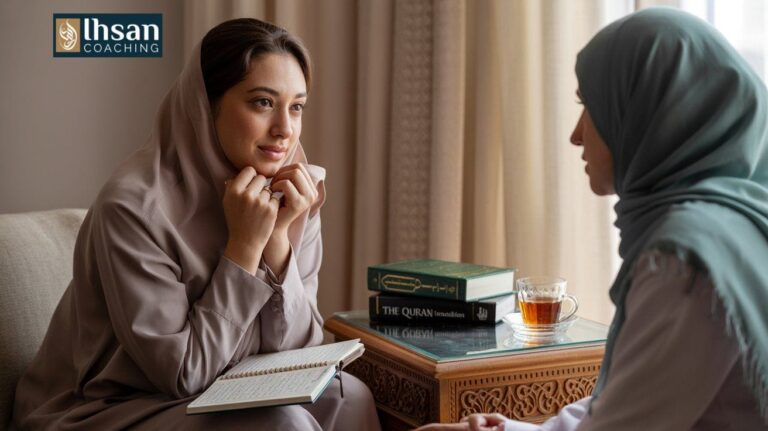


Marriage in Islam is designed to be a sanctuary of Mawaddah (love) and Rahmah (mercy). However, many Muslim women find themselves quietly struggling, unsure if their husband’s strict behavior is an Islamic requirement or toxic control. Cultural baggage often masquerades as religious teaching, leaving wives feeling trapped and guilty for questioning their husbands. But Islam firmly stands against oppression (Zulm) in all forms, especially within the sacred bond of marriage. If you are constantly walking on eggshells, it is time to separate cultural patriarchy from genuine Islamic leadership. Let’s explore the clear difference between a traditional husband and a controlling one.
Why Do We Confuse Tradition with Control in Islamic Marriages?
For generations, many cultures have intertwined patriarchal norms with Islamic teachings. This cultural overlap creates a confusing environment where toxic control is normalized under the guise of “traditional values.” When a husband demands unquestioning submission or restricts a wife’s basic freedoms, it is often defended as “religious strictness.”
Consequently, women who experience this coercive control often feel spiritual guilt for feeling unhappy. They are falsely led to believe that enduring emotional suppression is a sign of a pious wife. However, according to Islamic jurisprudence, a marriage is a partnership of mutual respect, not a master-and-servant dynamic. Oppression within the home contradicts the very essence of the Prophetic tradition (Sunnah).
What is Qawamah? The True Role of a Husband in Islam
The misunderstanding of control usually stems from a misinterpretation of Qawamah (Guardianship). In Surah An-Nisa (4:34), Allah says: “Men are the protectors and maintainers of women…”
Unfortunately, some men weaponize this verse to act as dictators. However, renowned Islamic scholars, including Ibn Kathir, explain that Qawamah refers to the responsibility of serving, protecting, and financially maintaining the family. It is a burden of care, not a license for tyranny.
The ultimate benchmark for a husband’s behavior is the Prophet Muhammad (SAW). He never used his authority to belittle or aggressively control his wives. Instead, he practiced Shura (consultation). He sought their advice on critical matters, helped with household chores, and communicated with profound gentleness.
Qawamah vs. Coercive Control
To make the distinction clearer, here is a breakdown of how genuine Islamic leadership differs from toxic control:
Feature | Genuine Islamic Leadership (Qawamah) | Coercive Control & Abuse |
Decision Making | Practices Shura (consultation); values the wife’s input. | Dictatorial; the wife has no voice or autonomy. |
Financial Security | Provides generously; the wife’s wealth remains entirely her own. | Financial abuse; tracks every penny or restricts her access to funds. |
Social Freedom | Encourages healthy relationships with her family and friends. | Isolates the wife from her support system. |
Spiritual Environment | Inspires faith through beautiful character and patience. | Spiritual Abuse: Weaponizes the Quran/Hadith to guilt-trip or induce fear. |
When Does Traditional Become Controlling? (The Red Flags)
When evaluating if a husband is controlling, it helps to look at modern psychological red flags through an Islamic lens. According to research by the Family and Youth Institute (The FYI), domestic abuse in Muslim communities often manifests subtly before it becomes physical.
Here are the classic signs of an abusive, controlling Muslim husband:
- Isolation from Loved Ones: If your husband frequently prevents you from seeing your parents or friends under the pretext of “a wife’s obedience,” this is a major red flag. Islam commands the maintaining of kinship ties (Silat al-Rahim), and a husband cannot force you to sever them.
- Micro-Management: Does he dictate trivial matters? Controlling what you wear inside the house, monitoring your private messages, or demanding an exact accounting of minor groceries is not Islamic leadership; it is coercive control.
- Spiritual Abuse: This occurs when a husband twists religious texts to justify his anger, manipulate your actions, or force intimacy when you are unwell. Using Allah’s name to invoke fear in a spouse is a grave spiritual offense.
- Lack of Consultation: Making major life decisions such as moving cities or making massive financial investments without considering your feelings or input violates the Sunnah of Shura.
If you recognize these patterns in your marriage, exploring professional marital coaching can help you safely address these toxic dynamics.

How to Differentiate Between Rightful Obedience and Oppressive Control?
A common question is: Can a husband use force to make his wife do something, no matter how trivial?
The definitive Islamic answer is no. In Islam, a wife’s obedience (Ta’ah) to her husband is not absolute. The Prophet (PBUH) explicitly stated: “There is no obedience to a creation in disobedience to the Creator.” Furthermore, obedience is only required in what is Ma’ruf (good, reasonable, and customary).
If a husband demands something that causes physical, emotional, or spiritual harm, the wife is not obligated to comply. Coercion destroys the core Islamic marital values. A marriage forced by fear is devoid of the Rahmah (mercy) Allah intended.
Why Does a Husband Become Controlling?
Understanding the “why” does not excuse the behavior, but it helps in finding a solution. From a psychological standpoint, controlling behavior rarely stems from genuine religious piety. Instead, it is often rooted in:
- Deep-Seated Insecurities: A lack of self-esteem can cause a man to dominate his home to feel powerful.
- Cultural Conditioning: Growing up in patriarchal environments where boys are taught that “control equals masculinity” leads to generational trauma.
- Low Emotional Intelligence: The inability to process stress or anxiety healthily often results in projecting control over a spouse.
According to global health statistics by the World Health Organization (WHO), controlling behaviors in intimate relationships are strong predictors of escalating emotional and physical abuse. This highlights the urgent need for individual coaching to help unlearn these toxic traits.
How to Handle a Controlling Husband in Islam?
If you are dealing with a controlling husband, staying silent is not your only option. Islam empowers you to seek justice and peace.
- Set Healthy Islamic Boundaries: Recognize that you have God-given rights. Communicating your boundaries respectfully but firmly is a fundamental step.
- Seek Arbitration: The Quran (4:35) outlines a clear dispute resolution method: appointing an arbiter from his family and one from hers. This brings accountability to closed-door abuse.
- Engage Professional Support: Sometimes, family members are too biased to help. This is where faith-based professional counseling becomes essential. Our experts offer dedicated religious consultation and coaching services to help couples navigate the delicate balance of faith and mental health.
- Know When to Walk Away: If the control escalates to abuse and all reconciliation efforts fail, Islam provides the wife the right to initiate a divorce (Khula). You are not expected to endure oppression indefinitely.
Conclusion
A truly traditional Islamic husband models his behavior after the Prophet Muhammad (PBUH) he is a source of safety, consultation, and mercy. If your marriage feels more like a prison than a sanctuary, you may be dealing with a controlling husband masking his insecurities behind religion.
You do not have to navigate this confusion alone. Whether you need to heal individually or wish to rehabilitate your marriage, our certified coaches are here to provide Islamically-integrated support. Book an appointment with Ihsan Coaching today to take the first step toward a healthier, more peaceful life.