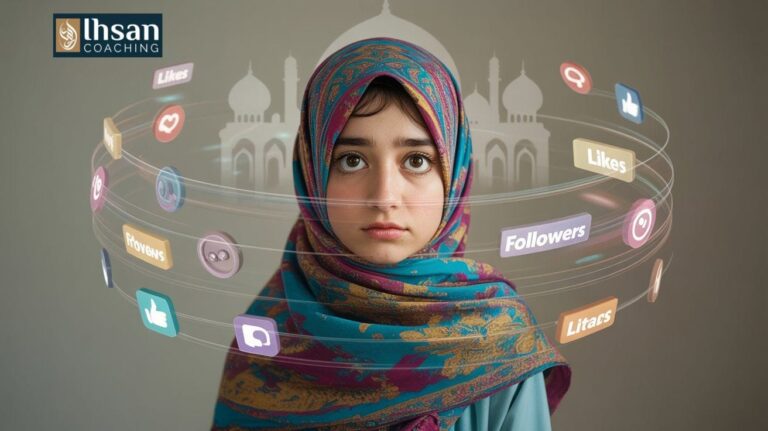
Summary: Islam does not require you to remain indefinitely in a marriage that causes serious harm, abuse, or persistent misery. Sabr means responding to hardship with faith and wise action, not accepting oppression without seeking help. Depending on the circumstances, Islam provides several paths, including reconciliation, mediation, counseling, Talaq, Khula, and other forms of Islamic separation.
If you feel trapped in your marriage, you may be struggling with an important question: “Does Islam require me to stay in this marriage no matter how unhappy or unsafe I become?”
No. Islam values marriage and encourages reconciliation, but it also recognizes that some marriages become deeply harmful. Your circumstances matter, and Islamic guidance provides steps for addressing marital problems while protecting dignity, faith, and well-being.
Why Do I Feel Trapped in My Marriage?
Feeling trapped can result from unresolved conflict, emotional neglect, financial problems, controlling behavior, abuse, or the belief that you have no acceptable way forward.
A marriage is intended to provide Sakinah, compassion, and mutual responsibility. When one or both spouses repeatedly fail to fulfill their rights and responsibilities, the relationship can become a source of significant distress.
Common reasons someone may feel trapped include:
- Emotional neglect: Your feelings and needs are repeatedly dismissed.
- Constant conflict: Arguments continue without meaningful resolution.
- Controlling behavior: Your spouse attempts to control your relationships, finances, movements, or decisions.
- Financial neglect: A spouse consistently fails to meet relevant financial responsibilities.
- Emotional or physical abuse: You experience intimidation, humiliation, threats, violence, or other harmful behavior.
- Loss of affection: The relationship has become emotionally empty or deeply distressing.
- Fear of cultural judgment: You worry that family or community members will condemn you for considering separation.
Islam does not treat every difficult period as a reason for divorce. At the same time, preserving a marriage does not mean ignoring serious harm.
The Prophet Muhammad ﷺ emphasized good treatment within marriage, including the well-known teaching: “The best of you are those who are best to their wives.” (Jami` at-Tirmidhi)
If abuse or immediate danger is involved, safety should take priority. Do not rely on marital counseling as the only response to violence or coercive control. Seek appropriate safety, legal, medical, and qualified professional support when necessary.
Does Islam Require Me to Be Patient With an Unhappy Marriage?
No. Sabr does not mean silently accepting abuse, oppression, or preventable harm. It means responding to difficulty with faith, self-control, and appropriate action.
Patience in Islam is not the same as doing nothing.
A person can practice Sabr while:
- Making sincere Dua.
- Reflecting on their own conduct.
- Communicating their concerns.
- Establishing appropriate boundaries.
- Seeking qualified advice.
- Involving trustworthy mediators.
- Pursuing counseling when appropriate.
- Considering separation when reconciliation is no longer workable.
The important distinction is between patience during hardship and passive acceptance of oppression.
If remaining in a marriage is seriously damaging your physical safety, emotional well-being, faith, or ability to live with dignity, seeking help is not a failure of Sabr.
What Should I Do If I Feel Trapped but Want to Save My Marriage?
Start with a structured process rather than making a major decision in the middle of an emotional argument. Islam encourages reconciliation and provides practical methods for addressing serious marital conflict.
1. How Can Dua and Self-Reflection Help?
Begin by turning to Allah and honestly examining the situation.
Make Dua for clarity, guidance, patience, and the strength to make a sound decision. Consider your own behavior as well. Ask yourself:
- What exactly is causing the distress?
- Have I clearly communicated the problem?
- Is the problem temporary or persistent?
- Have we both attempted to change?
- Are there signs of abuse or coercion?
- Is my spouse willing to work toward a solution?
Self-reflection should not become self-blame. You are responsible for your own actions, not for another person’s abusive behavior.
2. How Should I Talk to My Spouse About the Problem?
Choose a calm and appropriate time to discuss the problem rather than raising it during an argument.
Use specific language about the behavior and its impact:
- Explain what is happening.
- Describe how it affects you.
- State what needs to change.
- Listen to your spouse’s perspective.
- Agree on specific actions rather than vague promises.
For example, instead of saying, “You never care about me,” explain the specific behavior that is causing distress and what change you need.
However, direct communication is not always appropriate in abusive relationships. If confronting your spouse could increase the risk of violence, retaliation, or coercion, prioritize safety and seek professional support.
3. What Does Islam Say About Mediation Between Spouses?
When serious marital conflict cannot be resolved privately, Islam provides for arbitration through representatives from both families.
The Quran states:
“And if you fear dissension between the two, send an arbitrator from his people and an arbitrator from her people. If they both desire reconciliation, Allah will cause it between them.”
Quran 4:35
The purpose of mediation should be genuine reconciliation and justice, not forcing someone to remain in a harmful relationship.
Choose mediators who are:
- Trustworthy
- Fair
- Emotionally mature
- Knowledgeable about marriage
- Focused on the couple’s welfare
- Willing to recognize harmful behavior
Avoid involving relatives who automatically defend one spouse regardless of the facts.
4. When Should I Seek Islamic Marriage Counseling?
Professional counseling can help when both spouses are willing to understand the problem and work toward meaningful change.
A qualified counselor can help couples:
- Improve communication.
- Identify recurring conflict patterns.
- Establish healthier boundaries.
- Address emotional disconnection.
- Develop practical relationship skills.
- Determine whether reconciliation is realistic.
Faith-based support can be particularly useful when Islamic values and religious expectations are central to the relationship.
Ihsan Coaching’s marital coaching can be considered when you want structured relationship support.
For individual support, Ihsan Coaching’s individual coaching may help you work through personal concerns and clarify your next steps.
Important: Couples counseling is not automatically appropriate in situations involving serious domestic violence or coercive control. In those circumstances, specialized abuse support and safety planning may be more appropriate.
Is Divorce Allowed When a Marriage Makes You Miserable?
Yes. Divorce is permitted in Islam when a marriage cannot be maintained in a healthy and just manner. Islam encourages spouses to seek reconciliation, but it does not make staying together an absolute requirement regardless of circumstances.
Divorce should not be treated casually or used as the first response to every disagreement. But neither should religious language be used to force someone to remain in a relationship that has become seriously harmful.
Before pursuing divorce, it can be helpful to seek advice from a qualified Islamic scholar or counselor who understands both Islamic family law and the realities of marital abuse and conflict.
What Is the Difference Between Talaq, Khula, and Faskh?
Islamic separation can take different forms, and the terminology matters.
| Type | What does it generally mean? | Who initiates it? |
|---|---|---|
| Talaq | Divorce initiated by the husband under Islamic rules | Husband |
| Khula | A form of separation requested by the wife, traditionally involving an agreed return of marital consideration | Wife |
| Faskh | Judicial or scholarly dissolution of a marriage in circumstances recognized by Islamic law | Wife or affected party through an appropriate authority/process |
The exact rules and procedures for Khula and Faskh can vary according to Islamic jurisprudence and the legal system in which you live.
For that reason, someone considering separation should obtain case-specific guidance rather than relying solely on a general online article.
Can a Woman Seek Khula If She Feels Trapped in Her Marriage?
Yes, Khula is an established Islamic mechanism through which a wife can seek separation from her husband. Its precise conditions and procedure depend on the circumstances and the applicable school of Islamic jurisprudence.
Khula may become relevant when a woman believes she cannot continue the marriage and fears that remaining married would prevent her from fulfilling the relationship’s obligations properly.
The Quran discusses the principle of separation by mutual agreement in Quran 2:229, while the Sunnah includes the well-known case involving the wife of Thabit ibn Qays, in which the Prophet Muhammad ﷺ addressed a request for separation.
However, it is important not to reduce every case to a simple “Khula equals divorce for any reason” formula. The appropriate Islamic process depends on the facts of the marriage and the authority handling the matter.
If abuse, abandonment, financial neglect, or another serious issue is involved, ask a qualified scholar or appropriate Islamic authority whether Khula, Faskh, Talaq, or another remedy is applicable.
What If My Spouse Is Abusive?
If you are experiencing physical violence, credible threats, sexual violence, severe coercive control, or another immediate danger, prioritize safety rather than attempting to fix the marriage through ordinary communication.
You do not have to prove your suffering to everyone around you before seeking help.
Depending on your circumstances, consider:
- Moving to a safe location.
- Contacting a trusted person who can support you.
- Seeking emergency assistance if there is immediate danger.
- Obtaining medical care when necessary.
- Speaking with a qualified domestic-abuse professional.
- Consulting an appropriate Islamic scholar.
- Learning about your legal rights and available protections.
- Keeping important documents and essential resources accessible.
Islamic reconciliation should never be interpreted as a requirement to remain exposed to serious harm.
How Can I Decide Whether to Keep Working on My Marriage?
Look at patterns, not promises. A marriage may be worth continued work when both spouses acknowledge the problems and consistently take meaningful steps toward change.
Consider these questions:
| Question | What it may tell you |
|---|---|
| Does my spouse acknowledge the problem? | Whether there is accountability |
| Are their actions changing consistently? | Whether improvement is genuine |
| Can we communicate without fear? | Whether healthy problem-solving is possible |
| Is there abuse or coercive control? | Whether ordinary counseling is appropriate |
| Are both spouses willing to seek help? | Whether reconciliation has a realistic foundation |
| Is my safety at risk? | Whether immediate protective action is needed |
| Is my faith being seriously harmed? | Whether the current situation is spiritually sustainable |
A temporary disagreement and a long-term pattern of abuse are not the same problem. The response should reflect that difference.
What Should I Do If Nothing Changes?
If repeated attempts at reconciliation, communication, mediation, and appropriate counseling produce no meaningful improvement, separation may need to be considered.
You do not have to remain trapped in an endless cycle of:
Conflict → apology → temporary improvement → repeated harm → conflict again.
If the marriage has become persistently harmful, discuss your options with qualified people who can assess your specific situation.
Depending on the circumstances, those options may include:
- Continued structured reconciliation.
- Temporary separation.
- Talaq, where applicable.
- Khula, where applicable.
- Faskh, where applicable.
- Appropriate legal proceedings.
The goal is not simply to preserve the appearance of a marriage. The goal is to pursue a solution consistent with justice, dignity, faith, and well-being.
How Can Ihsan Coaching Help If I Feel Trapped in My Marriage?
Ihsan Coaching provides relationship and individual coaching designed to help people gain clarity and work through personal or marital challenges.
Depending on your needs, you may consider:
- Individual coaching for personal clarity, emotional support, and decision-making.
- Marital coaching for structured support around relationship challenges.
- Booking an appointment when you are ready to discuss your situation.
Coaching should complement, not replace, appropriate religious, medical, legal, or domestic-abuse support when those forms of assistance are needed.
Frequently Asked Questions
Is it haram to leave an unhappy marriage?
No. Being unhappy does not automatically make divorce necessary, but Islam does permit separation when a marriage cannot be maintained appropriately. The circumstances, rights of both spouses, and applicable Islamic rules should be considered.
Does Sabr mean I have to stay in a toxic marriage?
No. Sabr does not mean accepting abuse or oppression without taking action. A person can practice patience while seeking help, setting appropriate boundaries, pursuing reconciliation, or considering separation when necessary.
Can a Muslim woman ask for Khula?
Yes. Khula is an established form of Islamic separation requested by a wife. The conditions and procedure can vary, so case-specific guidance from a qualified Islamic authority is important.
Should I go to marriage counseling if my spouse is abusive?
Not necessarily. Ordinary couples counseling may not be suitable when there is serious violence, intimidation, or coercive control. Safety planning and specialized abuse support should be considered first.
What should I do if I have tried everything and my marriage is still harmful?
Seek qualified guidance about your available options. Depending on the circumstances, this may involve continued mediation, separation, Talaq, Khula, Faskh, or another legally and Islamically appropriate process. You do not have to make the decision without seeking knowledgeable support.
Your marriage matters, but so do your safety, dignity, faith, and well-being. If you feel trapped, the first step is not to make a rushed decision. The first step is to understand your situation, seek appropriate guidance, and identify a safe path forward.