


You work hard, earn well, yet something still feels missing. That’s because in Islam, wealth without barakah (divine blessing) leaves the soul empty.
Rizq in Islam isn’t just about money. It’s everything that sustains you: health, family, peace, and provision. Allah guarantees your rizq, but how you seek it determines whether it carries barakah or not.
The Qur’an and Sunnah provide clear guidance on earning wealth that truly satisfies. Here are five principles to bring barakah into your earnings and align your financial journey with Islamic teachings.
The Concept of Rizq in Islam
In Islam, rizq refers to everything that sustains and nourishes an individual. This includes not only wealth but also health, family, knowledge, love, and inner peace. Allah (SWT) assures us in the Qur’an that our sustenance is guaranteed and allocated by Him.
The Prophet Muhammad (ﷺ) said:
“Verily, the soul is inspired with its rizq. So fear Allah and be moderate in seeking, taking what is lawful and leaving what is forbidden.” (Ibn Majah)
Understanding rizq in Islam means recognizing that while Allah guarantees our provision, it is our responsibility to seek it through lawful (halal) means. This balance between divine trust and human effort forms the foundation of Islamic financial ethics.
1- Trust in Allah’s Plan for Your Rizq (Tawakkul)
One of the key principles in Islamic finance is tawakkul placing complete trust in Allah while putting in your best effort. This concept is beautifully highlighted in the Qur’an:
وَمَن يَتَّقِ ٱللَّهَ يَجْعَل لَّهُۥ مَخْرَجًۭا • وَيَرْزُقْهُ مِنْ حَيْثُ لَا يَحْتَسِبُ
“And whosoever fears Allah… He will make a way for him to get out (from every difficulty). And He will provide him from (sources) he never could imagine.” (Qur’an 65:2-3)
The Prophet (ﷺ) further emphasized this when he said:
“If you were to rely upon Allah with true reliance, He would provide for you as He provides for the birds. They go out in the morning hungry and return in the evening full.” (Tirmidhi)
In business and finance, many of us focus too much on our own efforts and forget to rely on Allah’s wisdom. Yes, hard work and strategy are necessary, but ultimate success lies in His hands. Learning to develop spiritual resilience can help you maintain this balance.
Actionable Tips:
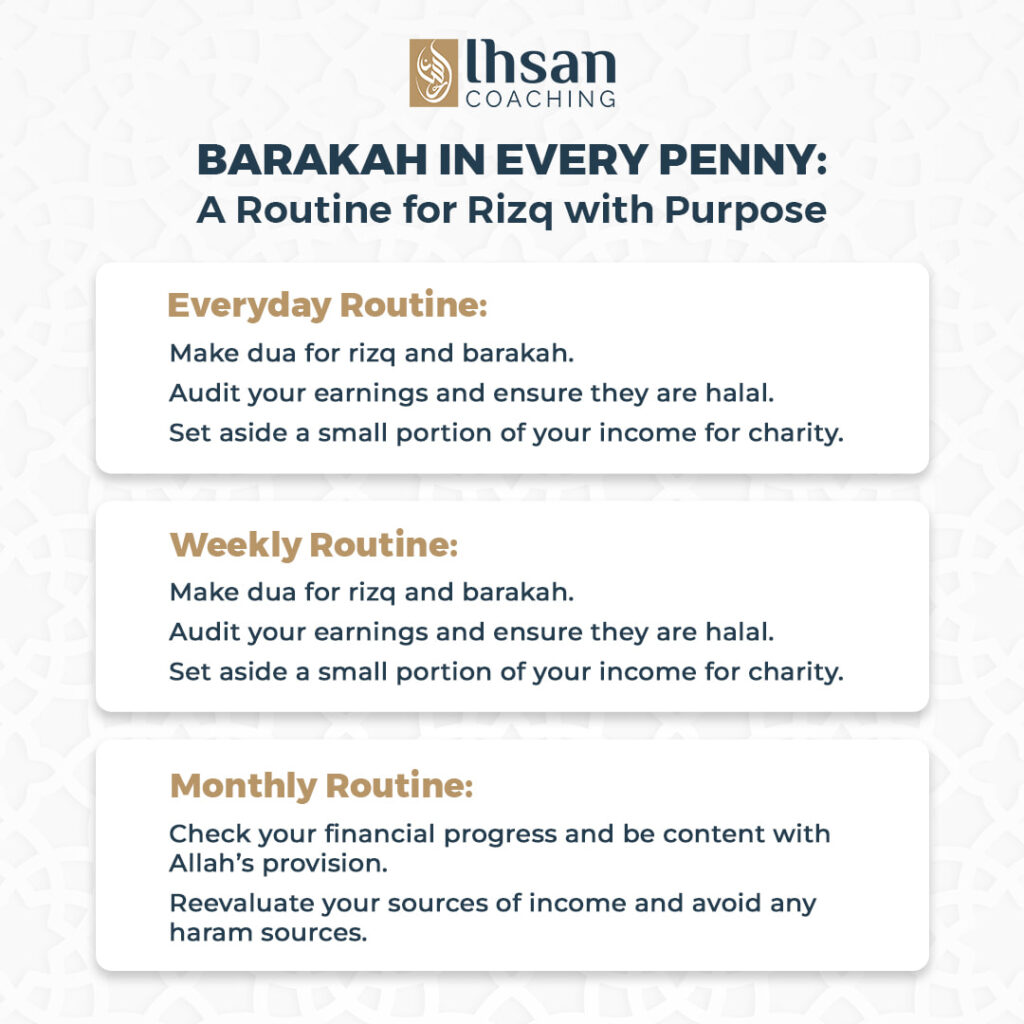
Daily: Start your day with dua for barakah in your sustenance
Weekly: Reflect on your work and seek contentment in the process, rather than stressing solely over results
2- Seeking Halal Earnings and Avoiding Haram Sources
The Qur’an is clear about avoiding haram (forbidden) earnings. In Islam, wealth earned through dishonest means such as usury (riba), gambling, or bribery is not only harmful to society but also to your soul. Barakah will never enter such wealth.
يَـٰٓأَيُّهَا ٱلَّذِينَ ءَامَنُوا۟ لَا تَأْكُلُوٓا۟ أَمْوَٰلَكُم بَيْنَكُم بِٱلْبَـٰطِلِ
“O you who have believed, do not consume one another’s wealth unjustly or send it [in bribery] to the rulers in order that [they might aid] you [to] consume a portion of the wealth of the people in sin, while you know [it is unlawful].” (Qur’an 2:188)
A 2022 Pew Research study found that 67% of American Muslims consider halal compliance important in their financial decisions. This growing consciousness reflects the understanding that halal earnings bring lasting peace, while haram wealth no matter how abundant carries spiritual corruption.
Real-Life Example: Consider a Muslim entrepreneur who turned down a lucrative partnership because it involved interest-based financing. Within a year, Allah opened doors to an even better halal opportunity that exceeded his expectations.
Actionable Tips:
Daily: Ensure your income sources are permissible; avoid shortcuts or unethical practices
Weekly: Audit your finances for gray areas and seek halal alternatives
3- Give Sadaqah (Charity) and Zakat Regularly
Allah reminds us in the Qur’an that charity purifies our wealth and multiplies it:
مَّثَلُ ٱلَّذِينَ يُنفِقُونَ أَمْوَٰلَهُمْ فِى سَبِيلِ ٱللَّهِ كَمَثَلِ حَبَّةٍۢ أَنبَتَتْ سَبْعَ سَنَابِلَ
“The example of those who spend their wealth in the way of Allah is like the one who plants a seed and reaps seven ears of corn, and in each ear, there are a hundred grains.” (Qur’an 2:261)
The Prophet (ﷺ) said:
“Charity does not decrease wealth.” (Muslim)
Whether it’s paying your Zakat (obligatory charity) or voluntary Sadaqah, giving opens doors to divine blessings. Understanding the importance of intentional giving can transform your relationship with wealth entirely.
Actionable Tips:
Daily: Set aside a portion of your income for charity, even if small
Weekly: Pay Zakat on time and establish Sadaqah as a lifestyle habit
4- Maintain Honesty and Integrity in Business Dealings
The Qur’an emphasizes honesty in every transaction:
يَـٰٓأَيُّهَا ٱلَّذِينَ ءَامَنُوا۟ لَا تَخُونُوا۟ ٱللَّهَ وَٱلرَّسُولَ وَتَخُونُوٓا۟ أَمَـٰنَـٰتِكُمْ
“O you who have believed, do not betray Allah and the Messenger or betray your trusts while you know [the consequence].” (Qur’an 8:27)
The Prophet (ﷺ) said:
“The truthful, trustworthy merchant will be with the prophets, the truthful, and the martyrs on the Day of Resurrection.” (Tirmidhi)
Real-Life Example: A business owner discovered an error in his favor during a transaction. Instead of keeping silent, he informed his client and corrected the mistake. This act of integrity led to a long-term partnership worth far more than the original oversight.
Honesty in business isn’t just ethical it’s strategic. Trust builds lasting relationships, repeat customers, and a reputation that attracts barakah naturally.
Actionable Tips:
Daily: Conduct all transactions with honesty, even when no one is watching
Weekly: Review business contracts to ensure alignment with Islamic principles
5- Be Content with What You Have (Qana’ah)
True wealth in Islam isn’t measured by accumulation but by contentment. The Qur’an teaches:
وَلَا تَتَمَنَّوْا۟ مَا فَضَّلَ ٱللَّهُ بِهِۦ بَعْضَكُمْ عَلَىٰ بَعْضٍۢ
“And do not wish for that by which Allah has made some of you exceed others. For men is a share of what they have earned, and for women is a share of what they have earned.” (Qur’an 4:32)
The Prophet (ﷺ) said:
“Richness is not having many possessions, but richness is the richness of the soul.” (Bukhari)
Real-Life Example: A professional earning six figures felt constantly anxious about not having enough. After implementing gratitude practices and understanding rizq in Islam, he found more peace with his current blessings while still working toward his goals.
Contentment doesn’t mean complacency it means appreciating what you have while striving ethically for more. Working with a faith-based coach can help you develop this mindset.
Actionable Tips:
Daily: Express gratitude for your current blessings
Weekly: Set realistic goals while finding peace in the present
FAQs About Rizq in Islam
1. How do I know if my income is halal?
Halal income is earned through ethical, moral, and lawful means. Avoid gambling, usury (riba), deception, and any illicit practices. When uncertain, consult a knowledgeable Islamic scholar.
2. How can I increase the barakah in my wealth?
Give charity regularly, maintain honesty in dealings, avoid haram earnings, express gratitude, and trust Allah’s plan for your rizq.
3. Does Allah guarantee my rizq?
Yes, Allah guarantees sustenance for every creation. However, seeking it through lawful means and trusting His plan remains our responsibility.
4. How can I get more barakah in my business?
Follow principles of honesty, seek only halal income, give Sadaqah profits, treat employees fairly, and maintain ethical practices in all dealings.
5. Can Sadaqah really increase my wealth?
Yes, the Qur’an and Hadith confirm that charity purifies wealth and attracts barakah, leading to increased prosperity in ways we cannot anticipate.
Conclusion
In seeking rizq and barakah, hard work alone isn’t enough we must ensure our efforts align with Islamic principles. Trust in Allah’s plan, earn through halal means, give generously, uphold integrity, and remain content with His provisions. These actions will not only bless your wealth but bring peace to your heart.
Take the first step today. Join Ihsan Coaching To learn how to implement these principles effectively in your business and personal life. Let’s embark on this transformative journey together.