Summary:
Wearing modest clothing or a hijab does not make Muslim women immune to body dissatisfaction, disordered eating, or body dysmorphic disorder (BDD). Lasting recovery requires separating toxic cultural standards from true Islamic teachings, shifting from an ownership model to viewing the body as a sacred trust (Amanah), and using clinically proven cognitive reframing tools. When negative body thoughts disrupt daily prayer or mental health, faith-informed professional counseling provides the most effective path to healing.
Why Do Muslim Women Struggle with Body Image While Wearing Modest Clothing?
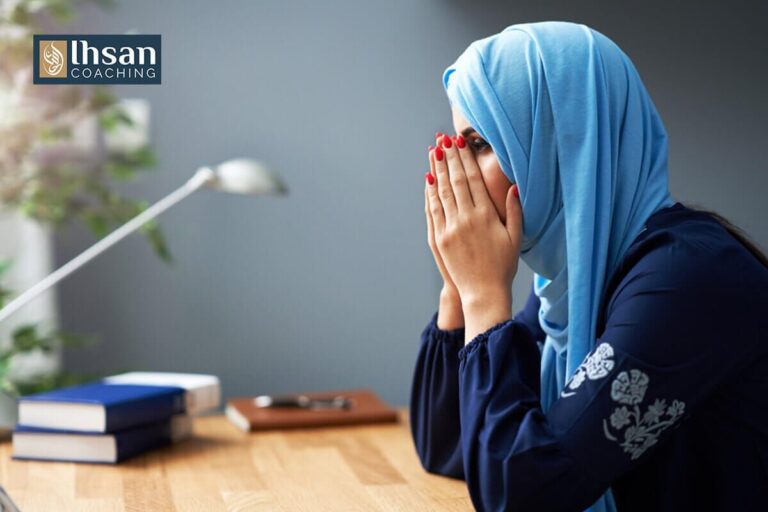
Muslim women struggle with body image because covering the body changes where scrutiny happens, but it does not eliminate societal pressure. While modest clothing reduces public sexual objectification, it often shifts appearance anxiety into private, female-only gatherings and digital spaces.
In a study published in the British Journal of Psychology, Dr. Viren Swami surveyed nearly 600 Muslim women in the United Kingdom. His research confirmed that wearing a headscarf regularly correlates with lower internalization of Western thinness ideals. However, clinical practitioners note that modest dress cannot protect against internal insecurity on its own.
Muslim women frequently face a dual-pressure paradox:
| Pressure Source | How It Manifests | Psychological Impact |
| Western Secular Media | Social media feeds featuring Eurocentric, surgically altered beauty norms. | Subconscious internalization of unattainable thinness and youth standards. |
| Intra-Cultural Expectations | Unfiltered remarks in segregated wedding halls, family events, and family visits. | Hyper-scrutiny over facial features, weight changes, and skin tone once the hijab comes off. |
| The Matrimonial Market | Bio-data requirements asking for specific heights, weights, and fair complexions. | Commodification, feelings of rejection, and high vulnerability before marriage. |
When clothing is treated as the only defense against body shame, women often blame themselves when insecurities surface. Many feel unwarranted spiritual guilt, assuming that feeling insecure means their faith is weak. In reality, human vulnerability exists regardless of what someone wears.
Why Is Cultural Body Shaming Often Confused with Religious Advice?
Cultural body shaming is frequently disguised as well-meaning health advice or religious reminders because communities conflate traditional social norms with divine guidance. In many families, older relatives routinely pass comments about a young woman’s weight or skin tone under the banner of family concern.
This habit harms self-esteem and contradicts authentic Islamic teachings. Islam explicitly forbids speech that demeans another person. The Prophet Muhammad stated that a true Muslim is one from whose tongue and hands other people are safe (Sahih al-Bukhari 10).
Cultural matchmaking, often called “rishta culture,” also treats women like retail products. Family matchmakers regularly filter candidates based on unrealistic physical criteria. When a woman faces constant physical critique during marriage proposals, it creates deep emotional distress. The counselors at Ihsan Coaching’s premarital program regularly see how these unresolved insecurities follow women into marriage, creating intimacy anxiety and chronic self-doubt.
True Sunnah living does not demand extreme thinness or aesthetic perfection. The Prophetic model prioritizes physical health, mindful eating, and emotional dignity. Belittling someone for their natural shape is a cultural failing, not an Islamic virtue.
When Does Normal Body Insecurity Turn into a Mental Health Disorder?
Normal insecurity becomes a clinical mental health disorder when preoccupation with physical appearance interferes with your daily functioning, social life, or acts of worship. Distinguishing between mild dissatisfaction and clinical conditions like Body Dysmorphic Disorder (BDD) or Eating Disorders (Anorexia, Bulimia, Orthorexia) is critical for early intervention.
MILD DISSATISFACTION CLINICAL IMPAIRMENT
───────────────────── ────────────────────
• Temporary frustration with clothes • Avoiding family/friends due to looks
• Occasional self-critique • Rigid calorie counting & purging
• Normal awareness of health • Fasts used secretly to diet/compensate
• Functional daily routine • Prayer disrupted by intrusive body thoughts
Warning Signs of Clinical Distress
- Social Isolation: Skipping university lectures, family gatherings, or community prayers because you feel too uncomfortable with your appearance to be seen.
- Compulsive Checking: Spending hours every day checking mirrors, taking repeated selfies to examine perceived flaws, or asking others for constant reassurance.
- Misusing Religious Fasts: Using voluntary fasts on Mondays, Thursdays, or the White Days to conceal restrictive dieting, calorie deprivation, or post-binge punishment.
- Distraction in Worship: Finding that intrusive thoughts about your weight, appearance, or caloric intake break your focus (Khushu) during daily prayer (Salah).
- Obsessive Exercise: Feeling intense anxiety or guilt if you miss a workout, or exercising through pain and injury while labeling it as “staying fit for the Sunnah.”
Farhan Ahmed, LCPC, founder of Ihsan Coaching, explains:
“Body image distress in our community is rarely about vanity. It is almost always an attempt to manage emotional pain, gain control during stressful periods, and cope with chronic shame. Telling someone in this situation to just make dua ignores the clinical reality of how trauma and anxiety affect the brain.”
If these symptoms disrupt your life, scheduling professional individual mental health coaching is an essential step toward recovery.
How Do the Quran and Sunnah Reframe Physical Self-Worth?
Islam reframes self-worth by shifting the definition of the human body from a decorative personal property (Milkiyyah) to a sacred, entrusted vehicle (Amanah). This distinction removes the pressure to sculpt a flawless exterior for social approval.
SECULAR PROPERTY MODEL (Milkiyyah) ISLAMIC STEWARDSHIP MODEL (Amanah)
────────────────────────────────── ───────────────────────
• “My body belongs to me.” • “My body belongs to Allah.”
• Worth depends on visual appeal. • Worth depends on spiritual character.
• Natural aging feels like failure. • Physical changes are a natural journey.
• The body is an aesthetic display. • The body is a functional instrument.
1. The Body as a Sacred Trust (Amanah)
Modern secular culture tells women that their bodies are personal property to alter, display, and monetize. When you view your body as a product you own, every natural physical imperfection feels like a personal flaw.
Islam teaches that your body belongs to Allah. You are its caretaker, not its manufacturer. Your body is a vehicle entrusted to your soul to carry out good deeds, care for your family, and stand in prayer. You care for it because it has rights over you, as recorded in Sahih al-Bukhari (5199): “Indeed, your body has a right over you.”
2. Divine Purpose in Creation
In Surah At-Tin, Allah states:
“We have certainly created man in the best of stature.” (Quran 95:4)“We have certainly created man in the best of stature.” (Quran 95:4)
Classical Quranic commentators, including Ibn Kathir, explain that Ahsan-i Taqweem refers to the upright nature, balance, and moral capability of the human design. It does not mean every human must match an artificial runway standard. Your height, bone structure, skin tone, and features were chosen deliberately by the Creator (Al-Musawwir). Rejecting your natural form means measuring divine wisdom against fleeting cultural trends.
3. Character Outweighs Physical Proportions
During the life of the Prophet Muhammad, his companion Abdullah ibn Mas’ud climbed a tree, revealing very thin legs. Some onlookers laughed at his build. The Prophet immediately intervened and asked them why they were laughing. He stated that in the sight of Allah, those thin legs weighed more on the divine scale of deeds than Mount Uhud (Musnad Ahmad 3991).
This principle is captured in the well-known Hadith:
“Indeed, Allah does not look at your appearance or your wealth, but He looks at your hearts and your deeds.” (Sahih Muslim 2564)“Indeed, Allah does not look at your appearance or your wealth, but He looks at your hearts and your deeds.” (Sahih Muslim 2564)
How Can Muslim Women Build Healthy Body Image Habits Every Day?
Building a healthy body image requires replacing critical self-talk with practical, evidence-based behavioral habits. You can build sustainable self-acceptance using four focused practices:
1. Practice Body Neutrality Instead of Forced Positivity
Popular culture promotes “body positivity,” which demands that women love every physical feature at all times. For someone dealing with chronic body shame, this expectation can feel dishonest and unattainable.
Use body neutrality instead. You do not need to feel visually stunning every day to respect your body. Body neutrality focuses on utility:
- Acknowledge that your body allows you to move, work, hug your children, and place your forehead on the ground in prostration.
- Tell yourself: “I might feel uncomfortable in my clothes today, but my body is working hard to keep me alive and healthy.”
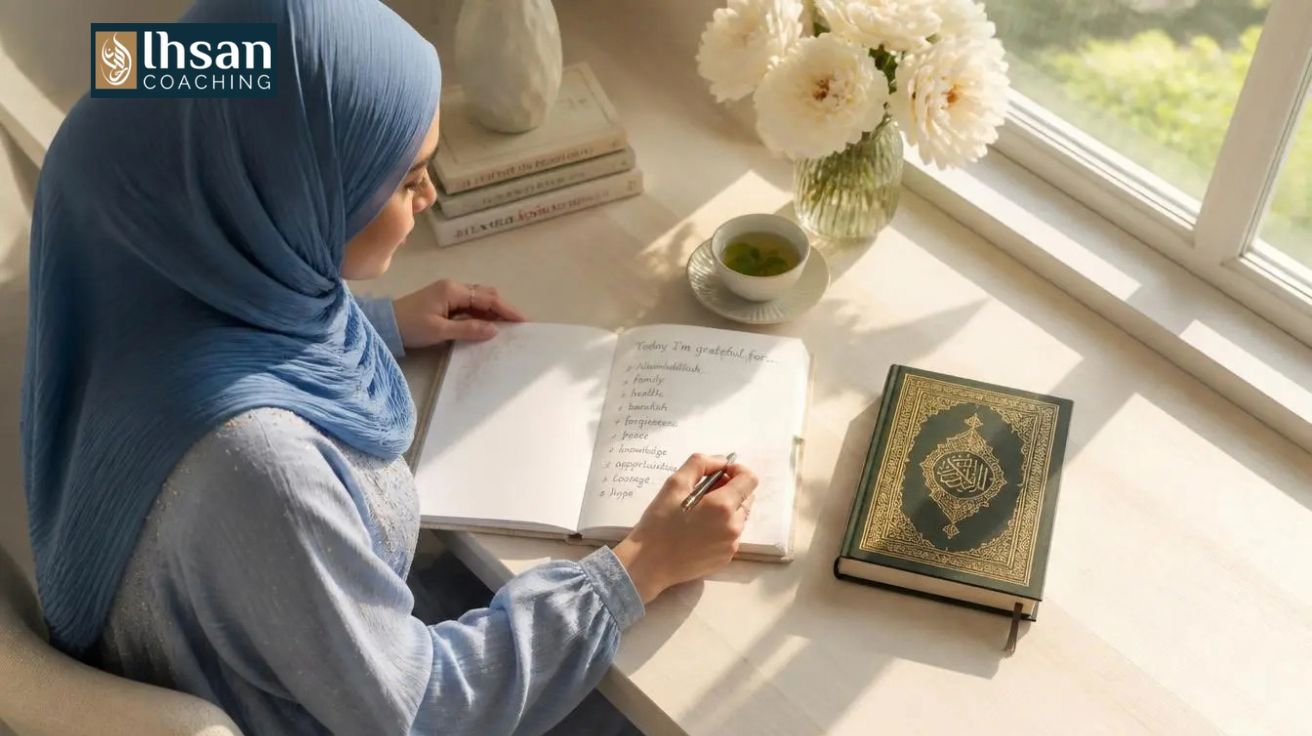
2. Use Functional Gratitude (Shukr) to Counter Negative Thoughts
Cognitive Behavioral Therapy (CBT) relies on cognitive restructuring to interrupt automatic negative thoughts. In an Islamic context, this practice works alongside intentional gratitude (Shukr).
When you catch yourself criticizing your reflection, challenge that thought immediately with functional gratitude:
- The Negative Thought: “I hate how wide my waist looks in this outfit.”
- The Functional Reframing: “Alhamdulillah for a body that digests my food, provides energy, and lets me move freely without assistance.”
This approach draws directly on practical Islamic self-care and mental health strategies to break repetitive cycles of negative thinking.
3. Clear Out Your Wardrobe and Social Media Feed
Your daily environment directly shapes your mental health. Remove visual triggers that undermine your peace:
- Mute or Unfollow Unhealthy Accounts: Remove beauty influencers, extreme fitness accounts, and fashion channels that leave you feeling inadequate.
- Get Rid of Clothes That Do Not Fit: Storing clothes that are several sizes too small turns your closet into an everyday source of guilt. Donate them and wear comfortable, dignified clothing that fits your current body.
4. Use Clear Scripts to Shut Down Critical Comments
When relatives or acquaintances make inappropriate remarks about your weight or appearance, respond with polite, firm boundaries:
UNSOLICITED CRITIQUE RECOMMENDED RESPONSE SCRIPT
──────────────────── ───────────────────────────
“You’ve gained weight since Eid.” “Alhamdulillah, my health is good.
How are your children doing?”
“You look tired and washed out.” “I feel well, thank you. Let’s focus
on enjoying our time together today.”
“Are you sure you should eat that?” “My plate is between me and my doctor.
Tell me about your latest work project.”
When Should You Seek Faith-Based Professional Coaching?
You should seek professional coaching or therapy when body image anxiety dominates your daily thoughts, damages your marriage, or leads to disordered eating habits.
Many Muslim women avoid therapy because they worry a secular therapist will misinterpret Islamic modesty, viewing the hijab or religious fasting as oppressive or problematic. At the same time, traditional community leaders may lack clinical training in conditions like BDD, often offering well-meant but insufficient advice like “just increase your prayers.”
Culturally informed clinical support bridges this gap. At Ihsan Coaching, licensed counselors combine clinical techniques like CBT and Acceptance and Commitment Therapy (ACT) with an authentic Islamic perspective. This integrated framework helps you unpack the emotional roots of insecurity without asking you to compromise your religious values.
If body image struggles are affecting your mental health, marriage, or spiritual peace, take a concrete step forward. Book an appointment with an Ihsan Coaching professional to begin your recovery.
Frequently Asked Questions
Is it sinful in Islam to care about physical beauty?
No. Islam encourages cleanliness, neatness, and self-care. The Prophet Muhammad stated that Allah is beautiful and loves beauty (Sahih Muslim 91). Taking pride in your hygiene, wearing clean clothes, and maintaining your appearance is praiseworthy. Concern about appearance only becomes spiritually harmful when it turns into obsessive vanity, arrogance (Kibr), or the primary measure of your self-worth.
How can a husband help his wife with body image insecurities?
A husband can support his wife by creating emotional safety and avoiding careless comments about her body, particularly during pregnancy, postpartum recovery, or natural aging. Verbalizing consistent appreciation for her character, daily efforts, and appearance makes a measurable difference. Couples experiencing persistent communication breakdowns around appearance and intimacy often resolve these patterns through structured marital coaching.
Are cosmetic surgeries permissible for fixing body image concerns?
Islamic jurisprudence permits medical and surgical procedures aimed at restoring normal function, correcting congenital defects, or repairing damage from injuries. However, elective surgeries carried out solely to conform to unrealistic beauty standards or vanity are generally impermissible because they alter Allah’s natural creation (Taghyir Khalq Allah). If you are considering cosmetic interventions due to deep emotional distress, consult a licensed mental health clinician and a qualified scholar to evaluate your underlying motives and well-being.
How can I stop comparing myself to other Muslim women on social media?
Stop comparing yourself by recognizing that social media feeds are curated, commercial portfolios, not everyday reality. Most images rely on favorable lighting, makeup, flattering angles, and digital editing. Establish clear digital habits: limit your daily screen time, curate your feed to prioritize educational and spiritual accounts, and remind yourself that an online post reveals nothing about a person’s inner peace or spiritual standing.