

Summary
“When your home feels like a battlefield, it’s hard to see a way out. This article explores why couples get stuck in repetitive arguments and offers a roadmap to peace.”
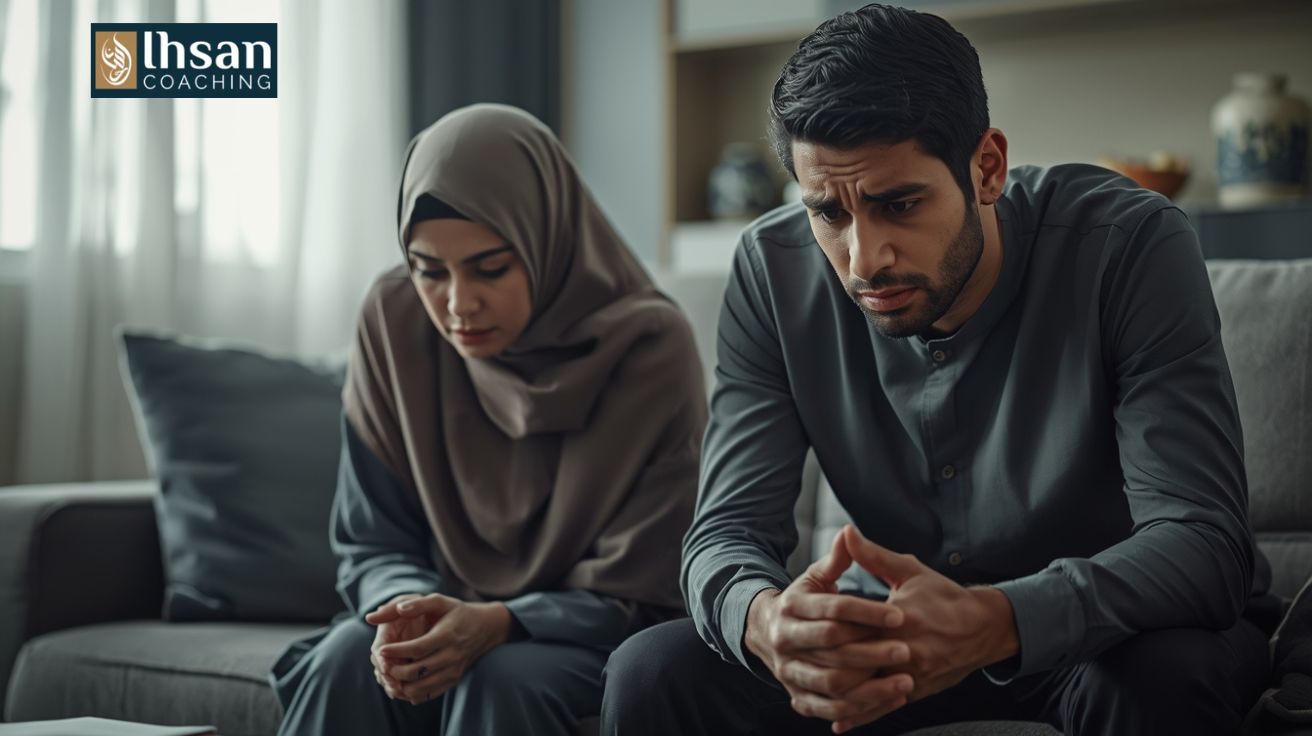
You wake up, and the tension is already there. It hangs in the air like a heavy fog. You walk around the house on eggshells, afraid that one wrong word, one heavy sigh, or one unwashed spoon will trigger another explosion.
You love your spouse, but you don’t like who you become when you are around them. The yelling, the silent treatment, the slamming doors it feels like a loop you cannot escape.
This is the exhausting reality of ongoing marriage conflict.
It is not just about having disagreements; every couple disagrees. It is about the chronic lack of resolution. It is the feeling that your home, which is supposed to be a place of Sakinah (tranquility), has turned into a war zone.
If you find yourself thinking, “We are arguing all the time, maybe we just aren’t compatible,” pause. The frequency of your fights often says less about your love and more about your patterns.
In this comprehensive guide, we will dive deep into the psychology of Muslim couple conflicts, analyze the communication breakdown in marriage that fuels the fire, and provide you with 5 actionable, Sunnah-based steps to break the cycle and restore mercy to your home.
The Anatomy of the Loop: Why We Get Stuck
Why do we fight about the same things over and over again? Why does a conversation about finances turn into an assassination of character? To stop ongoing marriage conflict, we first have to understand what is happening beneath the surface.
1- The Surface vs. The Root
Most couples think they are fighting about the “content” (the dishes, the in-laws, the lateness). But research and coaching experience show that you are actually fighting about the “process” and unmet emotional needs.
- The Surface: “You never take the trash out!”
- The Root: “I feel unsupported and overwhelmed, and I need to know you are my partner.”
When we attack the person instead of expressing the need, the other person defends themselves, and the cycle begins.
2- Emotional Flooding
When an argument escalates, your body goes into “fight or flight” mode. Your heart rate rises, and cortisol floods your system. Psychologically, this is called “flooding.”
When you are flooded, you literally lose access to the part of your brain responsible for logic, empathy, and Adab (manners). You enter survival mode. This is why you say hurtful things you don’t mean. You aren’t communicating; you are warring.
3- The Pursuer-Distancer Dance
This is a classic dynamic in Muslim couple conflicts.
- The Pursuer (often the wife): Feels anxious about the disconnection and criticizes or “nags” to get a reaction/connection.
- The Distancer (often the husband): Feels overwhelmed by the criticism and withdraws or shuts down to avoid conflict.
The more she pursues, the more he distances. The more he distances, the more she pursues. This creates a perpetual cycle of ongoing marriage conflict.
Communication Breakdown in Marriage: The Warning Signs
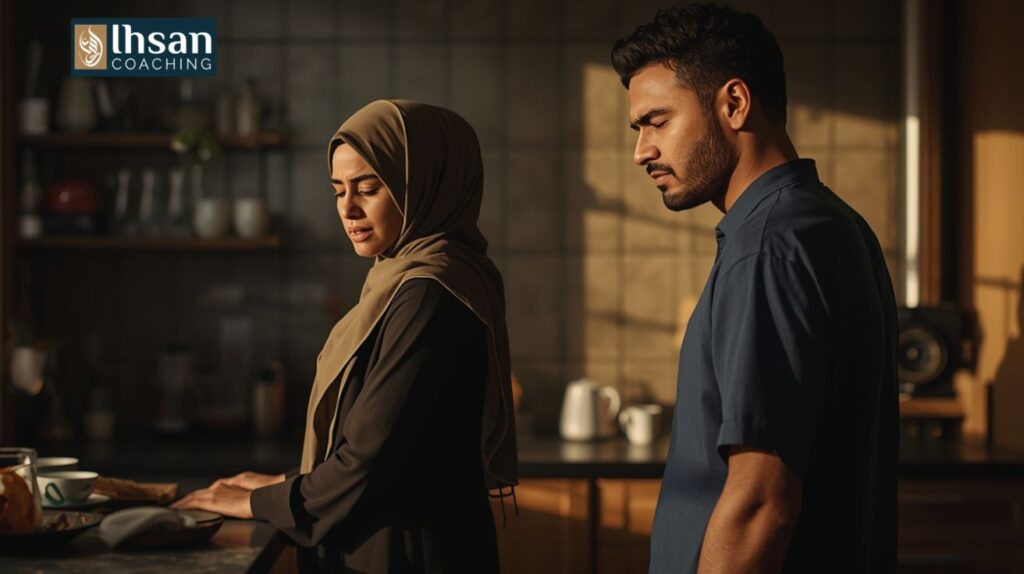
If you feel like you are speaking two different languages, you are experiencing a communication breakdown in marriage. Renowned relationship researchers have identified specific toxic behaviors that predict divorce if not checked. We see these constantly in our coaching sessions.
Criticism vs. Complaint
There is a massive difference between the two.
- Complaint: “I am upset that the bills weren’t paid on time.” (Focuses on the specific event).
- Criticism: “You are so irresponsible; you never pay attention to anything.” (Attacks the person’s character).
Criticism invites defensiveness. It tells your spouse, “You are the problem,” rather than “We have a problem.”
Defensiveness
When we feel criticized, our instinct is to shield our ego. We say, “It’s not my fault!” or “Well, you did this last week!” Defensiveness is a way of blaming your partner. It blocks any chance of empathy.
Contempt
This is the most dangerous horseman of the apocalypse. Contempt includes eye-rolling, sarcasm, name-calling (“idiot,” “lazy”), and mocking. It signals disgust.
From an Islamic perspective, contempt is a violation of the Muslim’s honor. The Prophet (PBUH) said: “It is enough evil for a person to look down upon his Muslim brother.” (Sahih Muslim). When contempt enters a marriage, love leaves.
Muslim Couple Conflicts: The Unique Layers
While the psychology of fighting is universal, Muslim couple conflicts often have spiritual and cultural layers that exacerbate the issue.
The Third Party: Shaytan
We cannot discuss ongoing marriage conflict without acknowledging the metaphysical reality. The Prophet Muhammad (PBUH) said:
“Iblis places his throne upon water; he then sends detachments (for creating dissension); the nearer to him in rank are those who are most notorious in creating dissension. One of them comes and says: ‘I did so and so.’ And he says: ‘You have done nothing.’ Then one amongst them comes and says: ‘I did not spare him until I separated between him and his wife.’ The devil goes near him and says: ‘You have done well.'” (Sahih Muslim).
When an argument feels disproportionate to the cause when a missing sock leads to threats of divorce recognize that Shaytan is blowing on the embers. He wants the home to break.
Spiritual Bypassing
This occurs when one spouse uses religion to silence the other.
- “Anger is Haram, so stop complaining.”
- “You are a bad wife if you don’t obey me instantly.”
- “A good husband wouldn’t let his mother speak to me like that.”
Weaponizing the Quran and Sunnah during a fight causes deep spiritual trauma. It creates a communication breakdown in marriage where one partner feels that God is against them.
The In-Law Pressure Cooker
In many cultures, the couple is not allowed to be an autonomous unit. External pressure from parents or extended family often fuels internal arguments. When a spouse feels their partner prioritizes the parents over the marriage, deep feelings of betrayal arise, leading to arguing all the time in marriage.
The Cost of Arguing All The Time
If left unchecked, constant fighting in marriage levies a heavy tax on the entire family.
- The Impact on Children: Children are emotional sponges. Even if you fight behind closed doors, they sense the tension. Research shows that chronic parental conflict leads to anxiety, behavioral issues, and insecure attachment styles in children. They learn that “love equals war.”
- Spiritual Decline: How can you have Khushu (focus) in your Salah when you are seething with rage? How can you make Du’a when your heart is hardened against your spouse? Discord in the home often leads to a disconnect from Allah.
- Physical Health: Living in a state of high cortisol weakens the immune system and increases the risk of heart disease and chronic fatigue.
5 Ways to Break the Cycle
You are tired of the fighting. You want peace. Here is how to break the cycle using the Ihsan Coaching methodology, blending modern psychology with the wisdom of the Sunnah.
1- The Sunnah Pause (De-escalation)
You cannot resolve a conflict when your nervous system is flooded.
The Prophet (PBUH) gave us a masterclass in anger management. He advised that if a person is angry while standing, they should sit down. If anger persists, they should lie down. He also advised performing Wudu, as water extinguishes the fire of anger.
Action Step: When you feel the rage rising, do not keep talking. Say, “I am feeling overwhelmed. I need 20 minutes to cool down, and then we will talk.” Step away, make Wudu, and physically change your state.
2- The Soft Start-Up
How you start a conversation predicts 96% of how it will end. If you start with a harsh attack, you will end with a war.
Action Step: Replace “You” statements with “I” statements.
- Harsh: “You never help with the kids. You are so selfish.”
- Soft: “I feel overwhelmed with the bedtime routine, and I would really appreciate your help tonight.”
This simple shift reduces defensiveness and prevents communication breakdown in marriage.
3- Repair Attempts
Happy couples fight, but they repair differently. A repair attempt is anything you do during a conflict to lower the tension. It can be a joke, a smile, an apology, or a gentle touch.
Action Step: Learn to say, “I’m sorry, that came out harsher than I meant,” or “Can we start this conversation over?”
The Prophet (PBUH) said the best of sinners are those who repent (Tawwabun). Admitting a mistake is not weakness; it is the height of Islamic character.
4- The “Iceberg” Exercise
Stop fighting about the surface issue. Look for the feeling underneath.
Action Step: Ask yourself, “Why does this hurt me so much?”
- Is it fear of abandonment?
- Is it feeling disrespected?
- Is it financial anxiety?
When you communicate the vulnerability (“I’m scared”) instead of the anger (“You’re wrong”), you invite your spouse’s compassion rather than their defense.
5- Ritual Connection (Dua)
Conflict disconnects us; worship reconnects us. It is very hard to stay angry at someone you are praying for.
Action Step: After a fight, or before you go to sleep, make a habit of making Dua together. It can be as simple as, “May Allah put Barakah in our marriage and forgive our shortcomings.” This invites the Angels back into your home and expels the influence of Shaytan.
Conclusion
Constant fighting in marriage is a heavy burden to carry. It clouds your heart, drains your energy, and steals the joy from your life. But remember, the intensity of your conflict often mirrors the intensity of your potential for passion and growth.
You are not enemies. You are two imperfect people trying to build a life together in the sight of Allah.
Shaytan wants you to give up. He wants you to believe that arguing all the time in marriage is your permanent reality. But with the right tools, sincerity, and effort, you can turn your home from a battlefield back into a sanctuary.
Is constant fighting in marriage pushing you to the brink?
You don’t have to navigate this darkness alone. Sometimes, you need a neutral guide to help you untangle the knots. At Ihsan Coaching, we help Muslim couples identify the root causes of their conflict and provide practical, faith-based solutions to stop the yelling and start the healing.
Book a consultation today and let us help you find your way back to each other. Peace is possible.