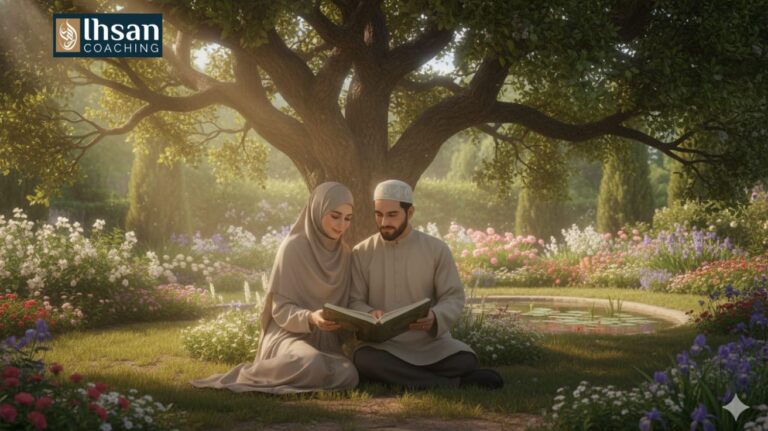


In my years as a marital coach at Ihsan Coaching, I’ve sat with countless couples on the brink of separation. Often, the root cause isn’t a lack of love, but a profound breakdown in communication.
Take “Ahmed” and “Fatima” (names changed for privacy), a couple I worked with last year. Ahmed was working 60-hour weeks to provide for his family his way of showing love through Acts of Service. But Fatima felt entirely disconnected and unloved. Why? Because her primary love language was Quality Time. They were speaking two different languages, leading to mutual exhaustion and resentment.
Did you know that 65% of divorces are linked to communication breakdowns (American Academy of Matrimonial Lawyers, 2023)? The way you speak love to your spouse is just as important as the words you say. This is where Dr. Gary Chapman’s concept of Love Languages, when viewed through the beautiful lens of the Qur’an and Sunnah, becomes a lifeline for marriages.
The Islamic Perspective on Love in Marriage
Islam beautifully emphasizes marital love and compassion:
وَمِنْ آيَاتِهِ أَنْ خَلَقَ لَكُم مِّنْ أَنفُسِكُمْ أَزْوَاجًا لِّتَسْكُنُوا إِلَيْهَا وَجَعَلَ بَيْنَكُم مَّوَدَّةً وَرَحْمَةً “And among His signs is that He created for you from yourselves mates that you may find tranquility in them; and He placed between you affection and mercy.” (Qur’an 30:21)
This verse captures the essence of love languages. Affection and mercy are expressed differently by different people, but their purpose is the same: to create tranquility (Sakinah) in the home. By aligning your love languages with Sunnah practices, you can create a marriage that is not only emotionally fulfilling but spiritually rewarding.
How to Apply the 5 Love Languages in Your Marriage
Misalignment between spouses often leads to frustration. Here is how you can intentionally speak your spouse’s language, integrating Islamic values into daily habits.
1. Words of Affirmation (Verbal appreciation and encouragement)
- The Sunnah: Use endearing nicknames for your spouse, just as the Prophet ﷺ did for Aisha (RA).
- Action Step: Send a heartfelt Dua message to their phone before Fajr. Compliment their specific efforts rather than giving generic praise.
2. Acts of Service (Helping and supporting practically)
- The Sunnah: The Prophet ﷺ was known to help with household chores.
- Action Step: Prepare breakfast or tea without being asked. Take over a stressful responsibility during your spouse’s busy week. Barakah Tip: Intend your service as sadaqah (charity) to gain reward from Allah.
3. Receiving Gifts (Thoughtful items showing you care)
- The Sunnah: The Prophet ﷺ said, “Give gifts, for it will increase your love for one another.” (Al-Adab Al-Mufrad).
- Action Step: Surprise them with a simple flower, a book, or an Islamic gift like a new Qur’an translation or prayer beads on a random weekday, not just on Eid.
4. Quality Time (Undivided attention and shared experiences)
- The Sunnah: The Prophet ﷺ would spend time walking and talking with his wives in the evenings.
- Action Step: Schedule weekly “no-phone dinners.” Plan spiritual retreats together, whether that is a major trip for Umrah or simply a weekend Qur’an study session.
5. Physical Touch (Intimacy and connection)
- The Sunnah: The Prophet ﷺ was deeply affectionate, holding hands and sharing physical closeness with his family.
- Action Step: Hold hands when making dua together. Greet your spouse with a warm embrace after returning home.
Comparative Table: Love Languages in Action
| Love Language | Example in Daily Life | Example in Sunnah/Islamic Practice | Long-Term Impact |
| Words of Affirmation | Saying “I appreciate you” daily | Prophet ﷺ praising Aisha (RA) | Builds confidence & security |
| Acts of Service | Cooking dinner after work | Prophet ﷺ helping in the house | Reduces stress, fosters teamwork |
| Receiving Gifts | Surprise flower or book | “Give gifts, increase love” (Hadith) | Creates excitement & memories |
| Quality Time | Weekly walk, phone-free dinner | Traveling together for Umrah | Strengthens companionship |
| Physical Touch | Holding hands during dua | Prophet ﷺ affectionate with wives | Increases intimacy & bonding |
The Barakah Steps for a Happy Marriage
Through my coaching practice, I’ve found that couples who thrive build a faith-driven routine. Here is a simple framework to keep your love languages alive:
- Daily: Exchange Duas for each other. Spend at least 15 minutes in distraction-free conversation.
- Weekly: Pray at least one Salah together at home. Have a “date night” (even a simple tea session counts).
- Monthly: Read Qur’an together and reflect on one Surah. Schedule a marriage check-in to discuss how you both are feeling.
Why Couples Still Struggle (And How to Fix It)
Even when you know your spouse’s love language, real life gets in the way. Work stress, parenting exhaustion, and unresolved emotional baggage can make speaking a love language feel forced. Assumptions expecting your partner to “just know” what you need are the silent killers of intimacy.
If you find yourselves stuck in this cycle of misunderstanding, professional marital coaching can help you identify blind spots and rebuild trust in a safe, guided environment.
FAQs: Love Languages in Marriage
What if my spouse and I have different love languages?
That’s normal. The key is compromise. You must make an intentional effort to “speak” your partner’s language, even if it doesn’t come naturally to you.
Can love languages change over time?
Yes. Life stages (parenthood, stress, illness) can shift needs. A mother of a newborn, for example, may suddenly prioritize “Acts of Service” over “Physical Touch.”
How do love languages connect with Islam?
They align perfectly with the Qur’an and Sunnah. Love, mercy, and compassion are the core of Islamic marriages, and love languages are simply practical tools to express those virtues.
Reignite Your Marriage Today
Your spouse is not just your partner; they are your path to Jannah. “The best of you are those who are best to their wives.” (Tirmidhi).
Don’t wait for misunderstandings to grow into walls. If you need support translating theory into daily habits, book a session with us today. Furthermore, for those looking to build their foundation through structured learning, we offer a range of courses focused on spiritual development and personal growth to help you thrive both individually and as a couple.