

There’s a quiet moment that hits you hardest.
Maybe it’s at a wedding where everyone keeps asking, “When is it your turn?” Or maybe it’s late at night, scrolling past engagement posts, feeling the ache of wanting something deeper; companionship, connection, family.
If you’re a single Muslim woman, you’re not alone in this feeling.
Loneliness is real, even when you have a successful career, friends, and a full schedule. The pain doesn’t always come from being alone; it comes from feeling unseen, unsupported, or left behind.
And you’re not the only one carrying this weight.
According to Pew Research, marriage rates among Muslim millennials are declining, and women report feeling left out of traditional matchmaking dynamics. At the same time, cultural expectations haven’t softened. You’re still expected to “wait patiently” while navigating the emotional toll alone.
But here’s the truth:
You don’t need to suffer in silence. Loneliness isn’t a personal failure; it’s a human experience. And healing begins when you give yourself permission to seek support. Individual coaching rooted in Islamic values offers a safe, judgment-free space to process your feelings, strengthen your faith, and reconnect with your purpose.
Let’s explore how.
Understanding the Emotional Landscape of Single Muslim Women
What Makes This Loneliness Unique?
Loneliness here isn’t just about not having a spouse. It’s about:
- Family pressure – Constant reminders about marriage at every gathering.
- Cultural expectations – Feeling “out of place” in events designed for couples and families.
- Self-worth struggles – Questioning your value because of delayed marriage.
- Fear of time slipping away – Worrying about biological and societal timelines.
- Inner conflict – Balancing faith and hope while battling disappointment.
This mix creates a deep emotional terrain where spiritual longing meets societal judgment.
What Does Islam Say About Loneliness?
Islam acknowledges human emotions, including grief, longing, and sadness. Even the Prophet Muhammad ﷺ experienced intense emotional moments, such as during the Year of Sorrow.
وَلَقَدْ خَلَقْنَا ٱلْإِنسَـٰنَ وَنَعْلَمُ مَا تُوَسْوِسُ بِهِۦ نَفْسُهُۥ ۖ وَنَحْنُ أَقْرَبُ إِلَيْهِ مِنْ حَبْلِ ٱلْوَرِيدِ
“And We have certainly created man, and We know what his soul whispers to him, and We are closer to him than [his] jugular vein.”
(Surah Qaf, 50:16)
This verse reminds us: Your pain is seen. Your whispers are heard. Allah is closer to you than you realize.
Islam Doesn’t Shame Loneliness
Let’s be clear: Islam acknowledges emotional states like grief, longing, and loneliness. Even the Prophet Muhammad ﷺ experienced deep sadness, including the Year of Sorrow after the loss of his wife Khadijah (RA) and his uncle.
The Qur’an reminds us:
“And We have certainly created man and We know what his soul whispers to him, and We are closer to him than [his] jugular vein.” (Surah Qaf, 50:16)
Your feelings are valid. They are seen by Allah.
What You Might Be Feeling Right Now
You May Be Asking:
- “Is something wrong with me?”
- “What if I never get married?”
- “How do I stay hopeful without falling apart?”
These questions often live under the surface. You stay strong for others, but deep down, you might be exhausted. Maybe even angry; with life, with family, with the way things are.
This inner conflict is where coaching becomes essential.
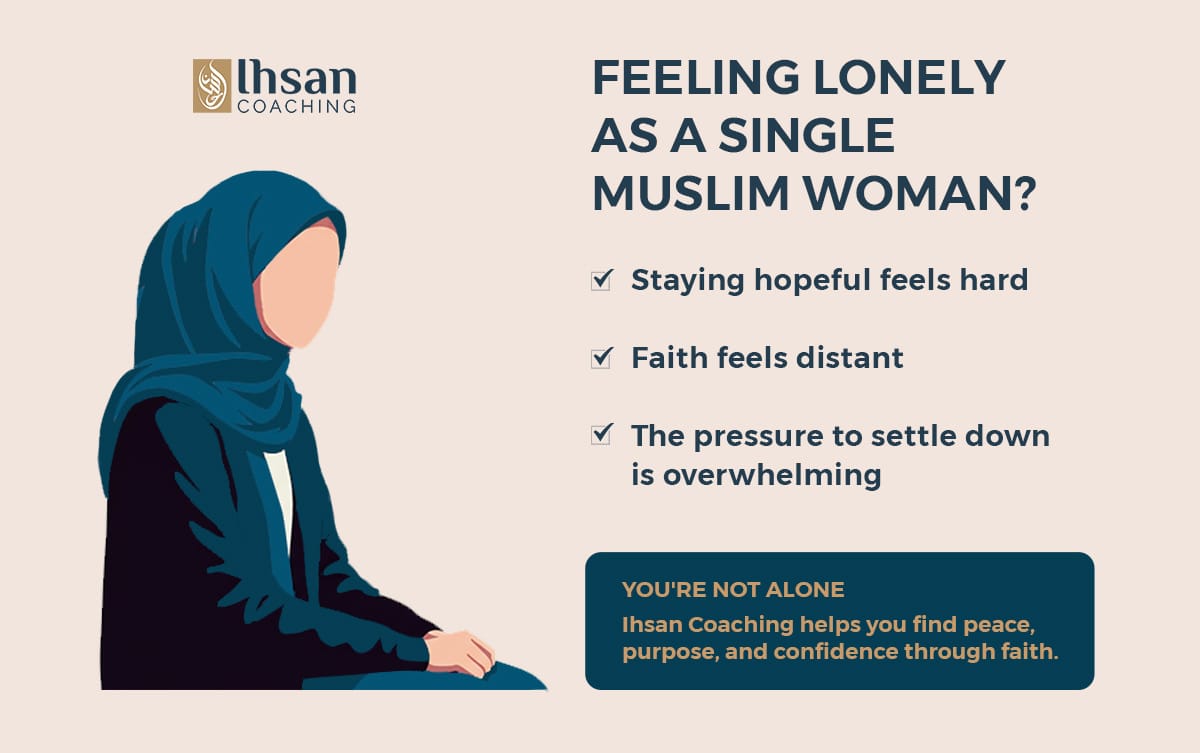
How Individual Coaching Helps with Loneliness
1- You Get a Non-Judgmental Space
Unlike casual advice from friends or well-meaning relatives, a professional coach offers confidential, compassionate support. You can speak freely about your fears, anger, sadness, and hopes, without filtering.
2- You Reconnect with Your Inner Strength
Many single women lose sight of their identity beyond marital status. Coaching helps you:
- Set personal goals outside of marriage
- Explore spiritual practices for peace
- Rebuild confidence
- Heal past emotional wounds
3- You Learn Practical Tools to Manage Loneliness
Coaching isn’t just talking; it’s actionable. You’ll learn how to:
- Identify emotional triggers
- Replace negative self-talk with compassionate self-reflection
- Build routines that nurture emotional and spiritual well-being
- Strengthen your Tawakkul (trust in Allah’s timing)
4- You Shift Your Narrative
You’re not just “waiting” for marriage. You are living, growing, and creating a meaningful life right now. Coaching helps you change your internal dialogue from scarcity to abundance, from “What if I’m not enough?” to “I’m already worthy.”
Why Choose Coaching with an Islamic Lens?
Generic life coaching often misses cultural and religious sensitivities. An Islamic approach integrates:
- Qadr (divine decree) – Understanding life delays through faith.
- Modesty & emotional expression – Finding balance in self-discovery.
- Spiritual empowerment – Using dua, dhikr, and Qur’anic reflection to stay grounded.
Signs You May Need Individual Coaching
- You feel emotionally drained despite staying busy.
- You avoid social events due to marriage questions.
- You feel spiritual disconnection despite regular worship.
- You secretly fear you may never get married and feel hopeless.
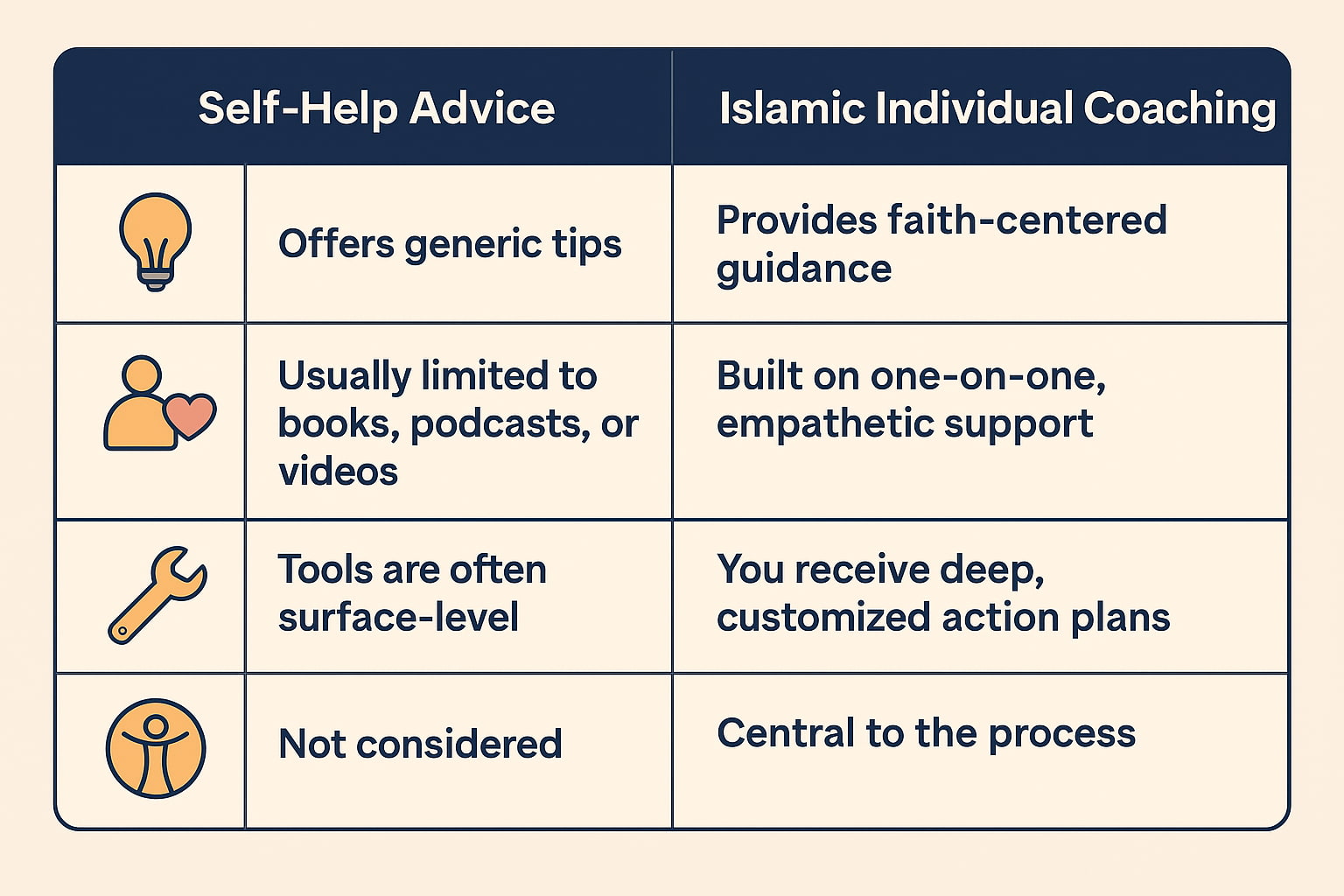
Coaching vs. Self-Help Advice
How Individual Coaching Helps with Dealing with Loneliness
1- You Get a Non-Judgmental Space
Unlike casual advice from friends or well-meaning relatives, a professional coach offers confidential, compassionate support. You can speak freely about your fears, anger, sadness, and hopes, without feeling judged.
2- You Reconnect with Your Inner Strength
Many single women lose sight of their identity beyond marital status. Coaching helps you:
- Set personal goals outside of marriage
- Explore spiritual practices for peace
- Rebuild confidence
- Heal past emotional wounds
3- You Learn Practical Tools to Manage Loneliness
Coaching isn’t just talking; it’s actionable. You’ll learn how to:
- Identify emotional triggers
- Replace negative self-talk with compassionate self-reflection
- Build routines that nurture emotional and spiritual well-being
- Strengthen your tawakkul (trust in Allah’s timing)
4- You Control Your Narrative
You’re not just “waiting” for marriage. You are living, growing, and creating a meaningful life right now. Coaching helps you change your internal dialogue from scarcity to abundance, from “What if I’m not enough?” to “I’m already worthy.”
Dhikr & Daily Habits to Overcome Loneliness
Powerful Dhikr for Inner Peace
Engaging in remembrance of Allah (Dhikr) helps calm the heart and ease emotional heaviness. The following can be part of a daily practice:
- Subḥānallāh wa biḥamdih (سُبْحَانَ اللَّهِ وَبِحَمْدِهِ)
“Glory is to Allah and praise is to Him.” - Recommended 100 times daily for forgiveness and tranquility.
- Astaghfirullāh (أستغفر الله)
“I seek forgiveness from Allah.” - Helps cleanse the heart and invite divine mercy.
- Lā ḥawla wa lā quwwata illā billāh (لَا حَوْلَ وَلَا قُوَّةَ إِلَّا بِاللَّهِ)
“There is no power and no strength except with Allah.” - A reminder of Allah’s control over life’s events, easing anxiety about the future.
- Ayat al-Kursi (Surah Al-Baqarah, 2:255) – Recite after every prayer for protection and spiritual strength.
Daily Habits to Build Emotional & Spiritual Strength
Morning Routine
- Fajr prayer followed by Qur’an recitation (even a few verses).
- Morning Dhikr – Subḥānallāh, Alḥamdulillāh, Allāhu Akbar (33 times each).
- A short gratitude journal – write three blessings daily.
Daytime Practices
- Mid-day reflection or short Qur’an reading to stay connected to Allah.
- Physical movement – light walking or stretching to release emotional tension.
- Engage in one act of sadaqah (charity) daily – even a small one like a kind word.
Evening Routine
- Maghrib/Isha prayer followed by longer dua and personal reflection.
- Reading/listening to tafsir (Qur’anic explanation) for spiritual grounding.
- Digital detox – reducing social media scrolling to avoid comparison and loneliness triggers.
7 Day Dhikr & Habit Plan for Emotional Strength
| Day | Morning (After Fajr) | Daytime Routine | Evening (After Maghrib/Isha) |
| Day 1 | Recite Subḥānallāh wa biḥamdih 100x | Read 1 page of Qur’an | Dhikr: Astaghfirullāh 100x |
| Day 2 | Gratitude journal – list 3 blessings | Give sadaqah (charity) – even small | Recite Ayat al-Kursi & Surah Ikhlas |
| Day 3 | Dhikr: Lā ḥawla wa lā quwwata illā billāh 50x | Take a 20-min walk, reflect on Allah’s creation | Dua for contentment & guidance |
| Day 4 | Read a short Surah (e.g., Surah Duha) | Write down one positive affirmation | Dhikr: Allāhu Akbar, Alḥamdulillāh, Subḥānallāh (33x each) |
| Day 5 | Dhikr: La ilaha illa Allah 50x | Read one Hadith about hope & patience | Silent reflection – 10 mins mindful breathing |
| Day 6 | Recite Morning Adhkar from Hisn al-Muslim | Help someone (call, support, smile) | Read/listen to Tafsir of 3-5 verses |
| Day 7 | Dhikr: Mix of all above (10x each) | Journal: Lessons learned this week | Dua for future – Tawakkul & trust in Allah |
Why This Matters
Building these spiritual and emotional habits creates a strong inner foundation. It helps shift the focus from “what is missing” to “what is meaningful,” reducing anxiety and fostering deep contentment.
What Healing Can Look Like
It’s not about pretending to be okay or “fixing” yourself. Healing is about gently uncovering what you need and learning to honor that without shame.
Over time, you may notice:
- A lighter heart during family gatherings
- A deeper connection to Allah
- Joy in your current blessings
- Peace with the unknown future
And yes, you may still want marriage. But that desire doesn’t have to drown you anymore.
You Are Not Forgotten
It’s okay to feel the weight of this loneliness. It’s okay to cry, to wonder, to hope.
But it’s also okay to say, “I want help navigating this.”
You don’t have to wait until you’re completely broken to reach out. You are allowed to seek support now, in your strength and your struggle.
At Ihsan Coaching, we offer individual sessions rooted in Islamic values to help you navigate loneliness with compassion, clarity, and courage.
Let us walk with you, so you don’t have to walk alone.

You Are Not Forgotten
الَّذِينَ آمَنُوا وَتَطْمَئِنُّ قُلُوبُهُم بِذِكْرِ اللَّهِ ۗ أَلَا بِذِكْرِ اللَّهِ تَطْمَئِنُّ الْقُلُوبُ
“Those who have believed and whose hearts are assured by the remembrance of Allah. Unquestionably, by the remembrance of Allah hearts are assured.”
(Surah Ar-Ra’d, 13:28)
Loneliness does not define you. It’s a temporary state, not your permanent story. With the right support, you can move from emotional isolation to spiritual empowerment and a life of meaning, right now.
At Ihsan Coaching, we help single Muslim women navigate loneliness through individual coaching, compassion, faith, and practical tools.
FAQs – Dealing with Loneliness as a Single Muslim Woman
1- Is it wrong to feel lonely even if I trust Allah?
Not at all. Even the most faithful believers experience loneliness. Islam encourages seeking support and turning to Allah with your emotions, not instead of them.
2- How is coaching different from therapy or talking to friends?
Coaching focuses on present challenges and future goals, using guided tools and reflection. It’s not therapy, but it provides a safe, structured, and spiritually aligned space for growth.
3- Can coaching help if I’m actively looking to get married?
Yes. Individual coaching can help you stay emotionally grounded, boost confidence, and clarify what you’re truly seeking, so you’re not just reacting to pressure, but choosing from alignment.
4- What Islamic sources do coaches use to support the process?
Muslim therapists or coaches may integrate Qur’anic wisdom, prophetic teachings, and Islamic psychology principles in ways that are respectful, personalized, and empowering.
5- What if I’ve been single for years, can it still help?
Absolutely. Whether you’ve recently started feeling this way or have carried the weight for a long time, it’s never too late to begin healing. Coaching meets you where you are.
6- Will the coach push me toward marriage?
No. Coaching is about you and your values, your pace, your needs. The goal is inner peace, not forcing a timeline.
7- Is this confidential?
Yes. All sessions are 100% private and professional. Your trust and emotional safety are a priority.
8- How do I start with Ihsan Coaching?
You can book a discovery call to explore your needs and see if the coaching is right for you. It’s a simple, no-pressure first step.
Need someone to talk to who truly understands your faith, your fears, and your journey?
Start your healing today with Ihsan Coaching.