
Home » Individual Coaching » Waswasa & Religious OCD
Waswasa & Religious OCD Coaching for Muslims
Repeating wudu, or restarting salah and asking again and again. It is exhausting, and it does not make you a weak Muslim.
Ihsan Coaching offers confidential, Islamically grounded coaching for waswasa, scrupulosity, and intrusive religious thoughts. Sessions are online and available in the US, Canada, and worldwide. This is coaching, not therapy or OCD treatment.
- 50-minute private sessions
- Starting at $119 per session
- Islamically grounded coaching

10,500+
Coaching sessions delivered
2,150+
Individuals supported
Worldwide
Private online sessions, wherever you live
Intrusive Thoughts Do Not Define You or Your Faith
Waswasa can involve unwanted doubts about wudu, salah, niyyah (intention), or faith. When those doubts keep returning and lead to repeated checking, restarting worship, or seeking reassurance, the pattern may overlap with religious OCD (scrupulosity).
Ihsan Coaching offers Islamically grounded support to help you understand these patterns and explore practical next steps. If you need an OCD assessment or treatment, including exposure and response prevention (ERP), a qualified clinician is the appropriate provider.
Signs of Waswasa and Religious OCD
Religious OCD (scrupulosity) can focus on what matters deeply to you, including prayer, purity, intentions, and faith. Repeating rituals, checking, or seeking reassurance may bring brief relief, but the doubt often returns. These patterns can be distressing and do not mean your faith is weak.
Purity and wudu doubts
You repeat wudu or ghusl, check for najasah (impurity), or doubt whether you completed purification correctly.
Prayer and intention doubts
You restart salah, repeat rak’ahs, or recheck niyyah (intention) because you feel you must be completely certain.
Intrusive religious thoughts
Unwanted blasphemous, sexual, or violent thoughts appear, causing distress because they conflict with your beliefs.
Reassurance and fatwa loops
You repeatedly ask family, scholars, or search engines the same religious question. Relief is brief, and the doubts return.
Sin, kufr, and moral fears
You worry that an unwanted thought, word, or mistake means you have sinned, lost sincerity, or fallen into kufr (disbelief).
Avoidance and mental rituals
You avoid prayer or decisions to escape uncertainty, or silently replay words, check thoughts, and repeat mental rituals.
How Do You Know If Waswasa Is Religious OCD?
Waswasa refers to troubling whispers or doubts, often about purity, prayer, intention, or faith. Experiencing these thoughts does not automatically mean someone has OCD.
When the doubts become persistent, distressing, and time-consuming, and lead to repeated wudu or salah, checking niyyah, or seeking reassurance, they may overlap with religious OCD, also called scrupulosity. The concern is the recurring cycle, not simply having an unwanted thought.
Only a qualified clinician can diagnose and treat OCD, including with exposure and response prevention (ERP). Ihsan Coaching provides coaching, not clinical OCD treatment.

Faith Does Not Have to Compete with Getting Help
Support for waswasa or religious OCD should respect your faith. Ihsan Coaching offers practical, Islamically grounded guidance to help you recognize recurring doubts, respond thoughtfully, and understand when clinical OCD treatment may be needed.
Recognize the pattern
Notice when doubts about wudu, salah, or faith lead to repeated checking, restarting, or seeking reassurance.
Understand faith and doubt
Explore Islamic principles for handling uncertainty without treating every unwanted thought as a religious failing.
Build practical habits
Work on everyday strategies for responding to recurring doubts while staying grounded in your values.
Know when to seek treatment
If you may need an OCD diagnosis or ERP therapy, seek assessment and care from a qualified clinician.
Looking for a Muslim OCD Therapist or Islamic OCD Counseling?
Looking for a Muslim OCD therapist or Islamic OCD counseling often means wanting support that respects both mental health and faith. Ihsan Coaching provides Islamically grounded coaching for waswasa and religious doubts—not OCD diagnosis, psychotherapy, or clinical treatment.
What we offer
- Private online coaching for waswasa and intrusive religious doubts
- Faith-aware guidance around wudu, salah, niyyah, and recurring uncertainty
- Practical reflection and goal-setting rooted in Islamic principles
- Guidance on seeking clinical OCD care when appropriate
Good to know
- Ihsan appointments are coaching services, even when a coach also holds a mental health license.
- We do not diagnose OCD, provide psychotherapy, or deliver Exposure and Response Prevention (ERP).
- If OCD assessment or treatment is needed, a qualified clinician experienced with OCD is the appropriate provider.
- Faith-sensitive coaching or religious guidance may complement clinical care, but does not replace it.
Learn more about religious OCD and faith-sensitive care from the International OCD Foundation: What is scrupulosity? · Faith-sensitive exposure principles (for clinicians).
Meet Our Waswasa Coach
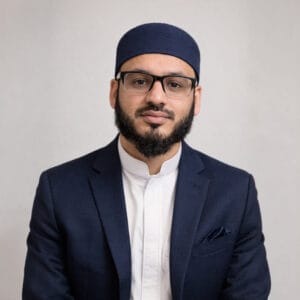
Shaykh Waseem Munir
Masters in Clinical Social Work · Islamic Scholar
Shaykh Waseem Munir combines mental health training with Islamic scholarship. He holds a Master’s in Clinical Social Work from York University and a Sanad in Islamic Sciences from The Academy of Sacred Knowledge. He offers faith-aware coaching for waswasa, religious doubts, and related personal concerns. Sessions through Ihsan Coaching are coaching, not clinical OCD treatment.
Areas of experience
Waswasa & religious OCD · Anxiety and stress · Grief · Relationship concerns
Languages
English
Urdu
Also teaches the Overcoming Religious OCD course.
You Don’t Have to Navigate Waswasa Alone
Recurring doubts about wudu, salah, or faith can be exhausting. Book a private, Islamically grounded coaching appointment to discuss your concerns and practical next steps.
Waswasa Coaching Pricing
Private online coaching for waswasa and religious doubts. Review available coaches and choose a single session or package.
Sessions from
$119
Four-session packages from $400
Fees may vary by coach. Confirm current pricing before booking.
Session length
About 50 minutes
Format
Private, online, worldwide
Coach selection
Shaykh Waseem Munir
Languages
Vary by coach; current coach offers English and Urdu
Typical coaching plan
Often 4–8 sessions; individual needs vary
Coaching services are not clinical therapy or mental health treatment. Waswasa coaching is part of Ihsan’s individual coaching service.
Explore Support at Your Pace
Explore helpful resources on waswasa, religious OCD, and Islamic guidance—whether you prefer reading, learning at your own pace, or speaking with a scholar.

OCD and Islam: A Muslim’s Guide to Healing
Explore how waswasa, intrusive thoughts, and religious OCD relate to faith, with practical information and an Islamic perspective.

Overcoming Religious OCD Course
Explore self-paced lessons about waswasa and recurring religious doubts, grounded in Islamic principles.

Religious Consultation
Speak with a qualified scholar about questions of worship and Islamic practice. Religious guidance is not clinical OCD treatment.
Frequently Asked Questions
Clear answers about waswasa, religious OCD, what coaching involves, and how to book.
Understanding waswasa
What is waswasa?
Waswasa is the Islamic term for troubling whispers and doubts, often about purity, prayer, intention, or faith. Many Muslims experience it occasionally. When waswasa becomes constant, distressing, and hard to resist, it can overlap with religious OCD, also called scrupulosity.
Is OCD the same as waswasa in Islam?
Not exactly. Waswasa is the Islamic term for troubling whispers and doubts that any believer can face. OCD is a mental health condition with obsessions and compulsions. The two can overlap when doubts turn constant, distressing, and disruptive, especially around wudu, salah, or fear of sin.
How do you know if waswasa is religious OCD?
Ordinary waswasa comes and goes without taking over your day. It may be religious OCD when the doubts return most days, take up significant time, push you to repeat, check, or seek reassurance, and leave you more anxious instead of settled. Only a licensed clinician can diagnose OCD. You can book an appointment to discuss whether coaching is an appropriate next step.
What is the treatment for waswasa?
Islamic guidance on waswasa often centers on seeking refuge in Allah and not acting on the doubt, following the principle that certainty is not removed by doubt. When waswasa is part of OCD, the evidence-based treatment is Exposure and Response Prevention (ERP) with a licensed clinician. Ihsan offers faith-centered coaching that helps you understand your pattern and decide which kind of support fits.
Intrusive thoughts & worship
Are intrusive thoughts sinful?
No. An unwanted thought you hate and reject is not the same as a belief you hold or a choice you made. The Prophet (peace be upon him) said that Allah has pardoned his ummah for what crosses their minds, as long as they do not act on it or speak of it (Sahih al-Bukhari and Sahih Muslim). If one thought troubles you, ask a qualified scholar once instead of searching repeatedly. Repeated checking usually feeds the doubt.
What do intrusive kufr thoughts mean in Islam?
Scholars generally do not treat an unwanted thought about kufr, one you dislike and push away, as disbelief. In a hadith recorded in Sahih Muslim, companions told the Prophet (peace be upon him) about thoughts they found too awful to speak, and he described their distress as a sign of clear faith. For a ruling on your own situation, ask a qualified scholar through a religious consultation.
Why do I keep repeating wudu or salah?
For many people, repeating comes from an urgent need to feel completely certain. If it eats your time, delays prayer, or leaves you anxious, it deserves attention. A coach can help you understand the pattern, and a licensed clinician can assess it.
What is religious OCD (scrupulosity)?
Religious OCD, also called scrupulosity, is OCD where the fears and rituals center on religion, morality, purity, sin, blasphemy, or whether worship was done correctly. Only a licensed clinician can diagnose it.
Coaching & clinical care
Can Ihsan Coaching treat OCD?
No. Ihsan provides faith-based coaching and religious consultation, not psychotherapy or clinical OCD treatment. Some coaches hold mental health licenses, but appointments through Ihsan Coaching are coaching services, not clinical therapy. If you need a diagnosis or treatment, we’ll help you understand how to find a licensed clinician.
I'm looking for a Muslim OCD therapist or Islamic OCD counseling. Can Ihsan help?
Ihsan offers coaching, not therapy. Some Ihsan coaches hold mental health licenses, but sessions through Ihsan Coaching are coaching, not clinical counseling. If you need diagnosis, ERP, or treatment for OCD, we will tell you honestly and help you look for a licensed clinician who respects your faith.
What is ERP, and does Ihsan provide it?
Exposure and Response Prevention (ERP) is an evidence-based therapy for OCD, delivered by licensed clinicians. Ihsan does not provide ERP. If it is the right fit, we can help you prepare to ask for it and explain your faith concerns to a clinician.
Can I discuss wudu, purity, salah, niyyah, or kufr fears?
Yes. These are exactly the kinds of struggles a faith-aware coaching appointment is built for, with clear boundaries between coaching, religious guidance, and clinical care.
Pricing & online sessions
How much does OCD coaching cost, and how long are sessions?
Waswasa coaching sessions start at $119, and four-session packages start at $400. Fees may vary by coach. Each session is about 50 minutes and held online. Most individuals need 4 to 8 sessions; individual needs vary. Confirm current pricing when you book.
Do you offer online OCD coaching for Muslims in the US and Canada?
Yes. Ihsan Coaching is fully remote and serves Muslims worldwide, including the United States and Canada. Languages vary by coach; sessions are currently available in English and Urdu.
Take the Next Step with Faith-Aware Support
Explore private online coaching for waswasa and religious doubts. Choose an available coach and book an appointment when you’re ready.
- Online worldwide
- 50-minute sessions
- Choose your coach