

Key Takeaways
- Online coaching works: Research suggests that online relationship education can deliver outcomes comparable to in-person programs.
- Who it helps: International couples, partners living in different US or Canadian cities, and engaged couples navigating visa timelines.
- Time zones are manageable: Couples can schedule sessions around both partners’ availability and local time zones.
- Family can join: A Wali or family members can attend selected video sessions from another country.
- The structure stays the same: Couples follow the same premarital coaching in five-session format, whether they meet online or in person.
An ocean or a border between two people does not make a proposal any less real, but it absolutely makes preparing for marriage logistically harder.
Two different countries, two sets of family expectations, a visa process neither of you fully understands yet, and a handful of overlapping hours to actually talk. This is exactly the situation premarital coaching was never originally built around, and exactly the situation it now adapts to best.
Quick Answer:
Yes, premarital coaching works fully online for long distance and international couples, and research comparing online and in person relationship education consistently finds comparable results rather than a lesser substitute. Sessions are scheduled around both partners’ actual time zones, family or a wali can join specific sessions by video, and the same structured format applies regardless of how many miles or borders sit between you.
Does Online Premarital Coaching for Long Distance Couples Work as Well as In-Person Coaching?
For couples living in different cities or countries, premarital coaching for long distance couples offers a practical way to prepare for marriage without the need to travel. Research offers encouraging evidence that online relationship support can work as well as in-person options in several important areas.
A 2021 study published in Frontiers in Psychology compared online and in-person couples therapy. It found that both formats helped couples build a strong working relationship with their therapist and achieve comparable improvements in relationship satisfaction.
Earlier research on web-based relationship education also found that a fully online program produced outcomes equivalent to an in-person workshop based on the same communication research. Some later studies of related online interventions found that in-person delivery had a modest advantage for certain outcomes. However, online coaching offers a clear practical benefit: accessibility. For couples separated by distance, work commitments, or visa timelines, it provides a way to prepare for marriage together when meeting in person is difficult or impossible.
Who Is This Actually Built For?
- A partner based in the US or Canada engaged to someone living abroad, commonly called an international proposal.
- Couples living in different cities or states while finishing school, a job contract, or a lease.
- Military service or a work assignment keeping partners apart during the engagement.
- A couple waiting on a visa process before they can legally relocate to the same country.
How Do Time Zones Actually Get Handled?
Sessions are scheduled around a window that works for both of you, not around a single office’s business hours. For couples with a wide time difference, that often means an early morning slot for one partner and a late evening slot for the other, which is a normal and expected part of scheduling rather than an inconvenience to apologize for.
Can Family or a Wali Be Involved From a Distance?
Yes. For couples navigating an international proposal, family involvement often matters even more than it would for a local engagement. A wali or family members can join specific sessions by video call exactly as they would in person, which keeps the vetting and blessing process intact even when everyone involved is in a different country.
What About the Visa and Immigration Timeline?
Many international engagements are running on a parallel clock: a fiance visa or spousal sponsorship process with its own paperwork and timeline. Premarital coaching is not legal or immigration advice, and a qualified immigration attorney should always handle that side of the process directly.
What coaching can do is run alongside that timeline rather than waiting for it to finish, so the relationship groundwork is already in place once the paperwork clears and you are finally in the same country together.
Does Distance Itself Create Specific Things to Work Through?
- The pace of time together shifts from short, intense visits to a shared daily routine once you are finally in the same place.
- Adjusting to actually living together can surface habits and expectations that video calls never revealed.
- Cultural differences that felt minor over a screen can feel larger once you are managing a household across two family cultures.
- Family expectations in two different countries sometimes pull in different directions, which is worth naming before the wedding, not after.
Distance Has Never Been the Measure of a Good Match
Long before video calls existed, Muslim marriages were often arranged and pursued across real distance, through letters, family correspondence, and trusted go between, long before two people ever shared a city. Geography was never the measure of whether a match was sound. Sincerity, compatibility, and the willingness to actually prepare were.
A long distance engagement asks for a different kind of patience, but it does not ask for less seriousness in how you prepare. If anything, the distance is exactly why the structure of dedicated sessions matters more, since you do not have the daily, in person time together to work things out informally.
What Does a Session Actually Look Like Logistically?
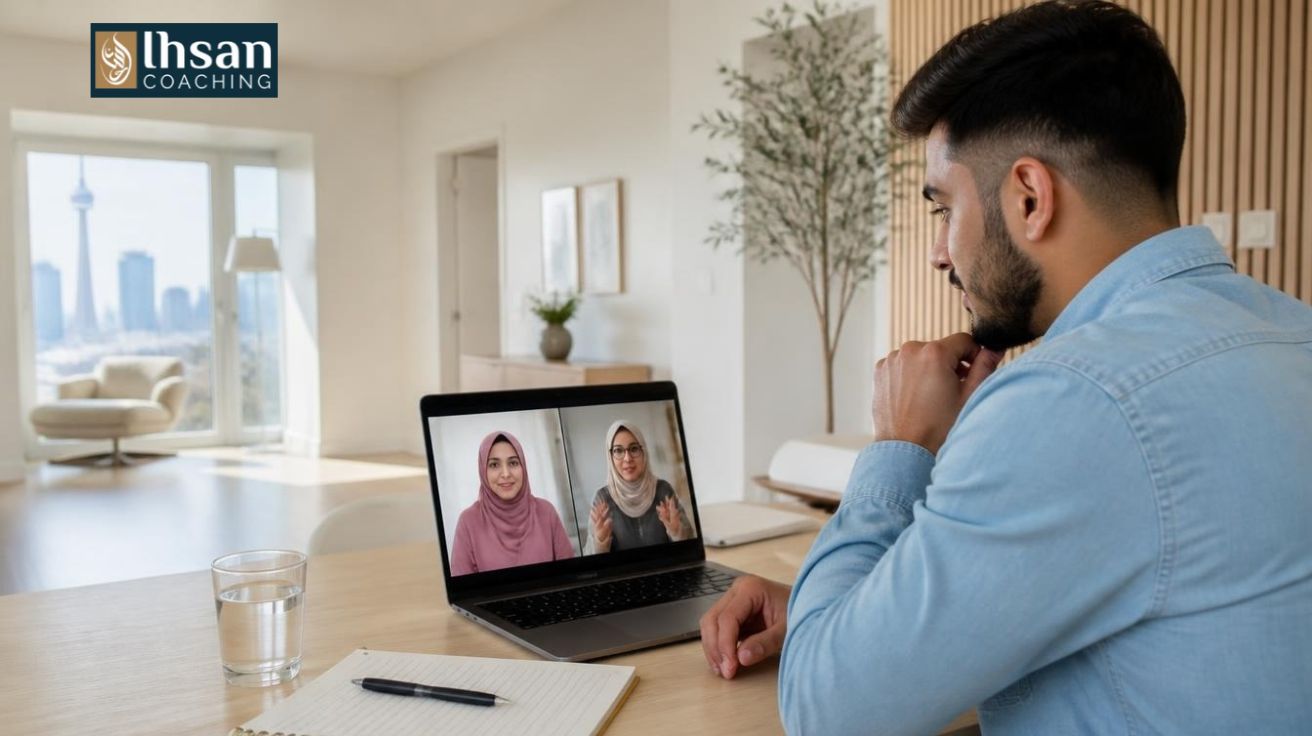
Sessions run over video call, with the same structured content covered in person delivered through screen sharing and guided conversation. Between sessions, short worksheets or reflection prompts help make up for the natural, unscheduled conversation that an in-person engagement would otherwise have simply by being in the same place day to day.
Frequently Asked Questions
Does online coaching work if we have not met in person yet?
Yes. Many couples begin premarital coaching before an in-person meeting has been possible, and the sessions are structured to work regardless of how much in person’s time you have had so far.
What if our families are in different countries and cannot live?
Sessions can be scheduled around family availability when needed, and in some cases family input can be gathered separately and brought into the relevant session.
Should we wait until we are in the same country to start premarital coaching?
No. Starting while you are still apart means the groundwork is already in place once you are finally together, rather than trying to build it during an already overwhelming transition.
What if one of us has unreliable internet access?
Let your coach know in advance. Sessions can often be adjusted around connectivity limitations, including audio only options when video is not reliable.
If distance is the main thing making this feel complicated, a first conversation can show you exactly how the process works for your specific situation. Book your appointment with Ihsan Coaching and we will walk through logistics with you directly.